Despite the typical challenge of expanding a business in California, the owners at the HUB, a pickleball club quickly gaining steam, have opened three unique facilities in San Diego, Alameda, and Silicon Valley. Simply put, the HUB is doing a lot of things right, as each club offers exceptional pickleball courts, tasty food, and a lively community at each location. Business expansion can be difficult in any state, let alone in California, but the HUB’s prudent philosophy of growth has yielded several fruitful facilities. The current owners, Ted Angelo and Pat Rolfe hope to further their club’s growth by franchising to other states in the near future.
Before starting the HUB, Angelo and Rolfe played pickleball together at a local club and helped that club build and design new pickleball courts. After helping to install courts for their local club, the two decided that they wanted to do the same thing but for their own club. Building courts for others gave them the confidence to build courts for themselves.
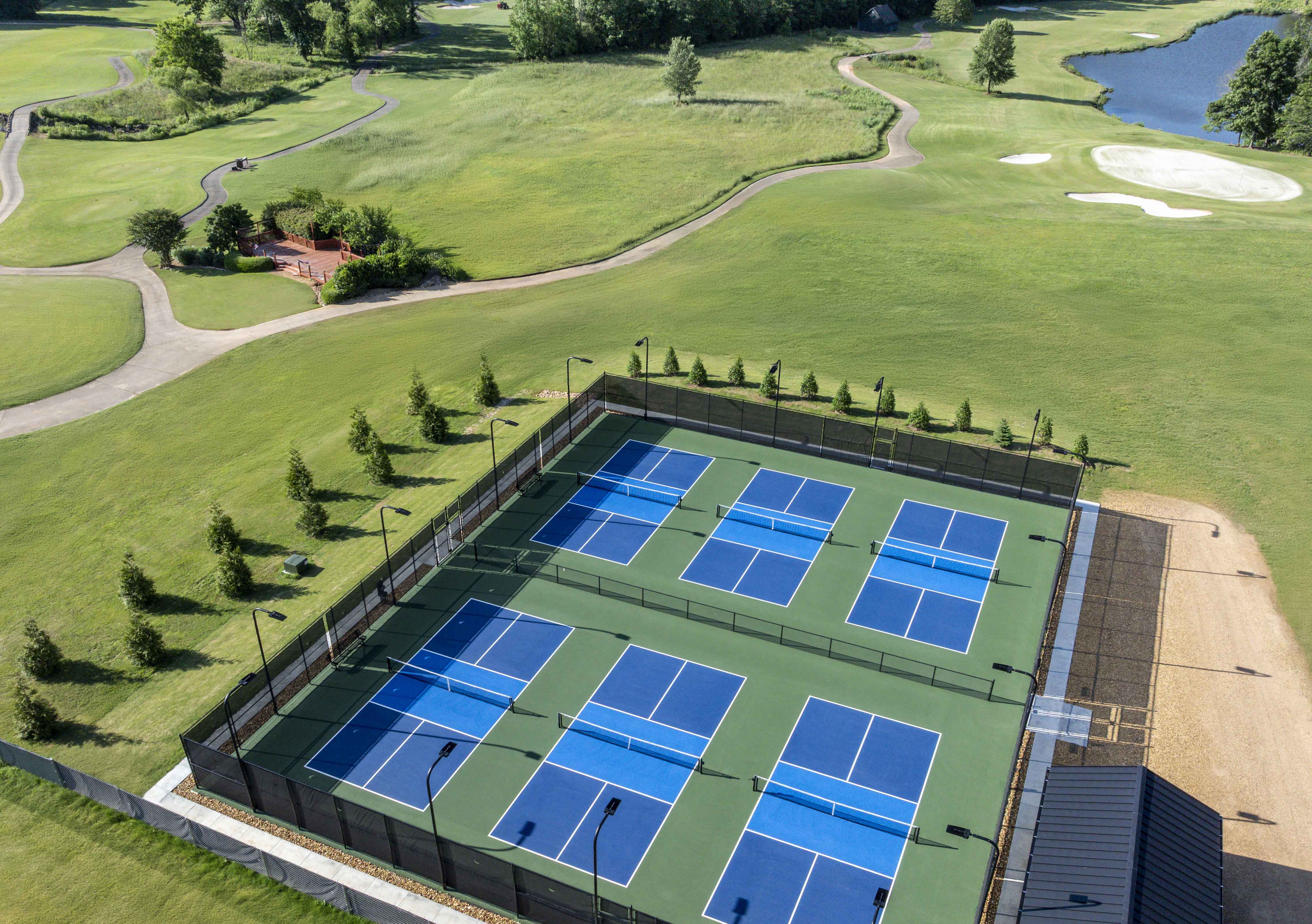
On January 1, 2023, they opened their first location in San Diego, with 26 state-of-the-art outdoor courts and two covered championship courts. Besides the courts, there are various shaded gathering areas for socializing, as well as a cafe, bar, and pro shop. Each of these amenities fulfills the HUB’s goal of providing a “wonderful” customer experience.

Though the San Diego location’s cafe is profitable, Angelo comments that it is also very hard to run, time-consuming, and expensive. He recommends that new, less experienced club owners should avoid starting a food service at the beginning and consider opting for a food truck alternative instead.
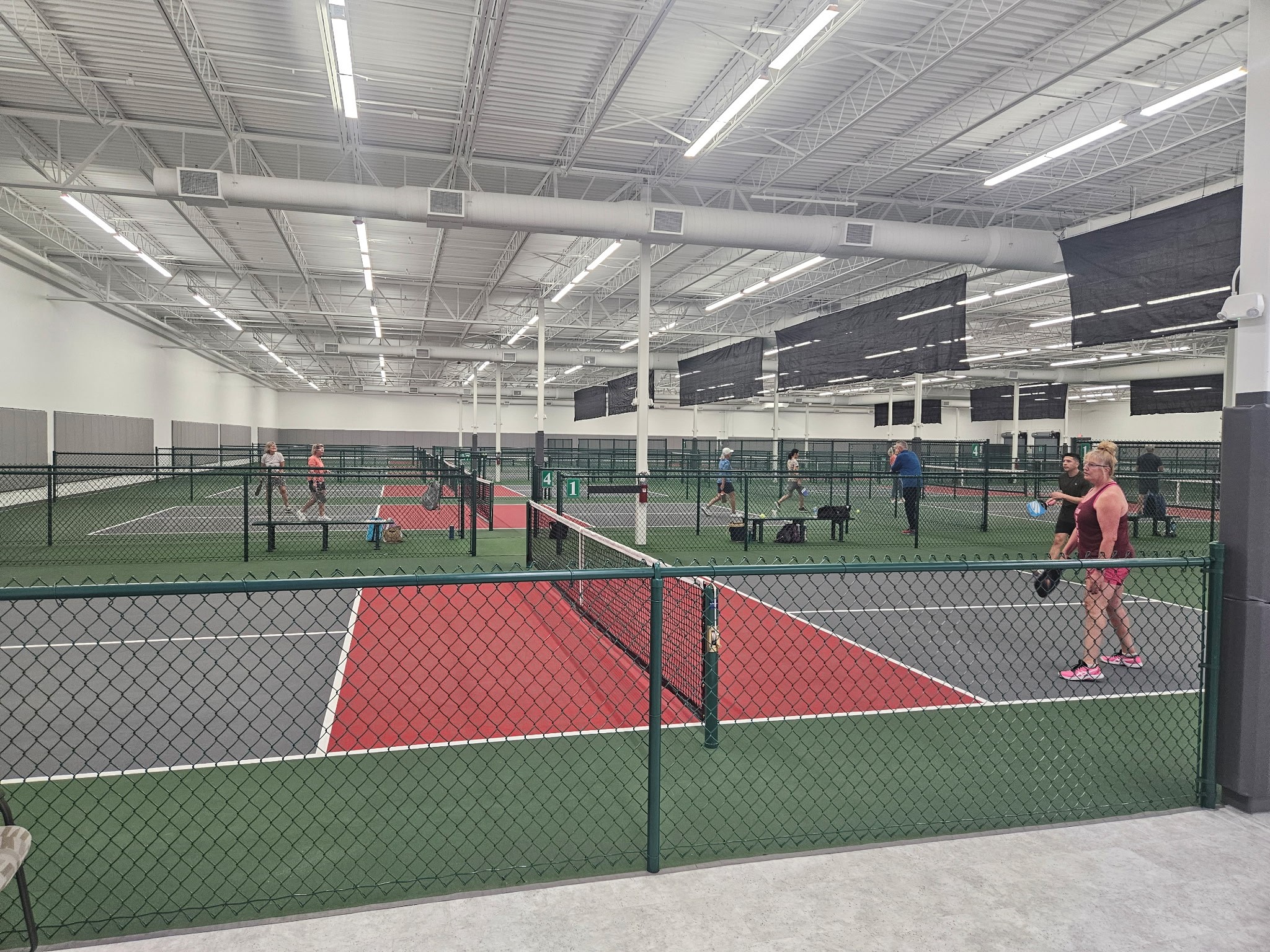
Angelo and Rolfe brought the HUB to Silicon Valley in August 2023. The Silicon Valley location sports 20 indoor courts, multiple viewing areas, a lounge, and a fully stocked pro shop.
The HUB at Alameda was opened in November of 2023 and might be the HUB’s most unique location because it doubles as a fitness center. The HUB at Alameda has 8 indoor courts, 7 outdoor courts, strength training equipment, a cardio center, locker rooms, a sauna, a steam room, and a well-furbished pro shop.

The HUB owners are big on branding, and they love the color blue. Each location has different shades of blue everywhere—on the courts, walls, and room decor. They chose blue because it is a “happy” color. The owners also unify their brand by putting their logo on the walls at each location.
Another commonality between each facility is creative programming. Angelo remarks, “The most important part about being a club is programming.” Social directors at each location keep the programming fresh by brainstorming new ideas and getting feedback from members. The HUB hosts an array of clinics, ladder leagues, and open-play options. One of their more creative events is the October Pickleball Showdown which is a round-robin tournament complete with drinks, Halloween costumes, prizes, and even some karaoke. The HUB will also be helping to host the California State Pickleball Championships in 2025.
The owners at the HUB believe that it is vital for expanding clubs to assimilate into their communities. The folks at the HUB integrate each facility into its local community with unique wall designs specific to each city. The San Diego location has a Coronado Bay Bridge designed on one of the windscreens. The Silicon Valley facility has Stanford University painted on the wall, and the Alameda location has the USS Hornet, a World War II aircraft carrier. Angelo remarks, “Each building has to have its own personality.”

Expanding clubs need to provide good programming and integrate themselves into the surrounding area. They also need a reliable, positive roster of staff members. Angelo stresses the importance of hiring capable general managers, active social directors/tournament directors, and an overall happy and cheerful staff. Hiring a suitable staff may require some trial and error, but patience and dedication put towards finding a satisfactory staff is well worth the struggle.
The folks at the HUB are looking into turning their club into a national franchise; however, they are doing so cautiously: “We want to make sure the model works, and that we don’t make a mistake. The worst thing you can do is over-franchise.” Angelo notes that one of the dangers of over-franchising is that owners can start so many facilities that they are unable to inspect and manage all of them. To over-expand is to risk watering down the club’s brand.
Despite their reservations, the HUB owners are hoping to open a new location in Jacksonville, Florida at the end of this year.
Successful expansion often comes down to balancing quality and quantity and uniformity and creativity. Time will tell whether the HUB and other clubs around the country can strike this balance, but so far, the future looks bright.