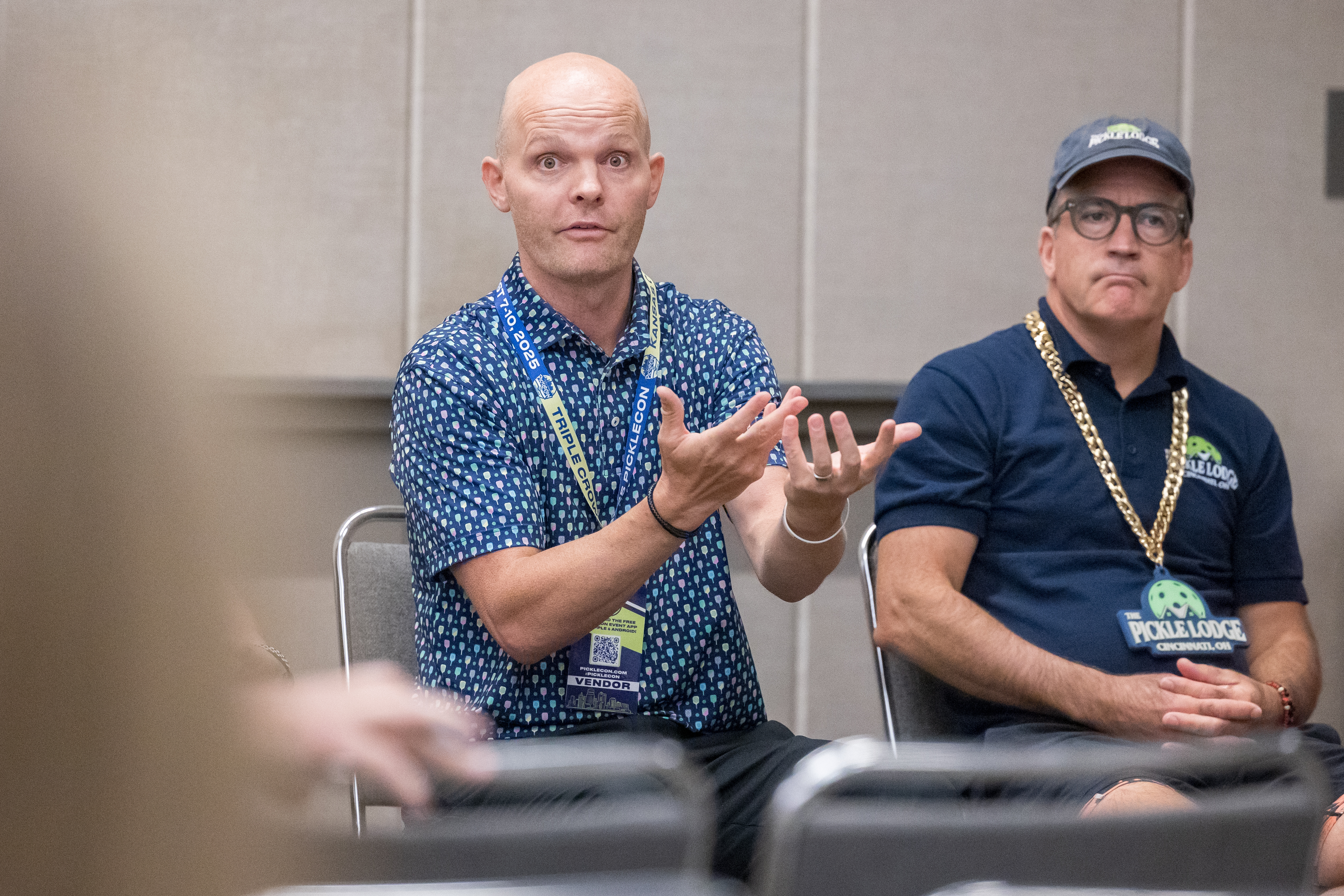
Mitch Dunn is a true pickleball enthusiast whose passion for the game has shaped one of Cincinnati’s most vibrant pickleball communities, the Pickle Lodge. Combining his years of experience in brand strategy and marketing with his love of the sport, Mitch has created a club that balances competition, community, and fun. Known for his innovative approach to programming and his ability to connect with players at every level, he has built a space where both new and experienced players can learn, grow, and enjoy the game together. This interview came from a live breakout session at PickleCon in August of 2025.
Pickleball Club Magazine: So Mitch, do you mind just introducing yourself? Tell a little about Pickle Lodge.
Mitch Dunn: I’m a pickleball fanatic. I fell in love with the game in 2017. My very first time on a pickleball court I tore the meniscus in my right knee. Welcome to pickleball. But even that didn’t stop me. After just one week of playing on vacation in northern Michigan, I was hooked. I had the knee repaired as soon as I got home and immediately started thinking about starting a club in Cincinnati.
I’d spent 30 years in brand strategy and marketing, and I’ve always been drawn to taking on big challenges. In 2020, right in the middle of COVID, I launched a nonprofit pickleball club. I made myself easy to find, and that’s how my business partner, Joe Frank, discovered me simply by searching for pickleball in Cincinnati.
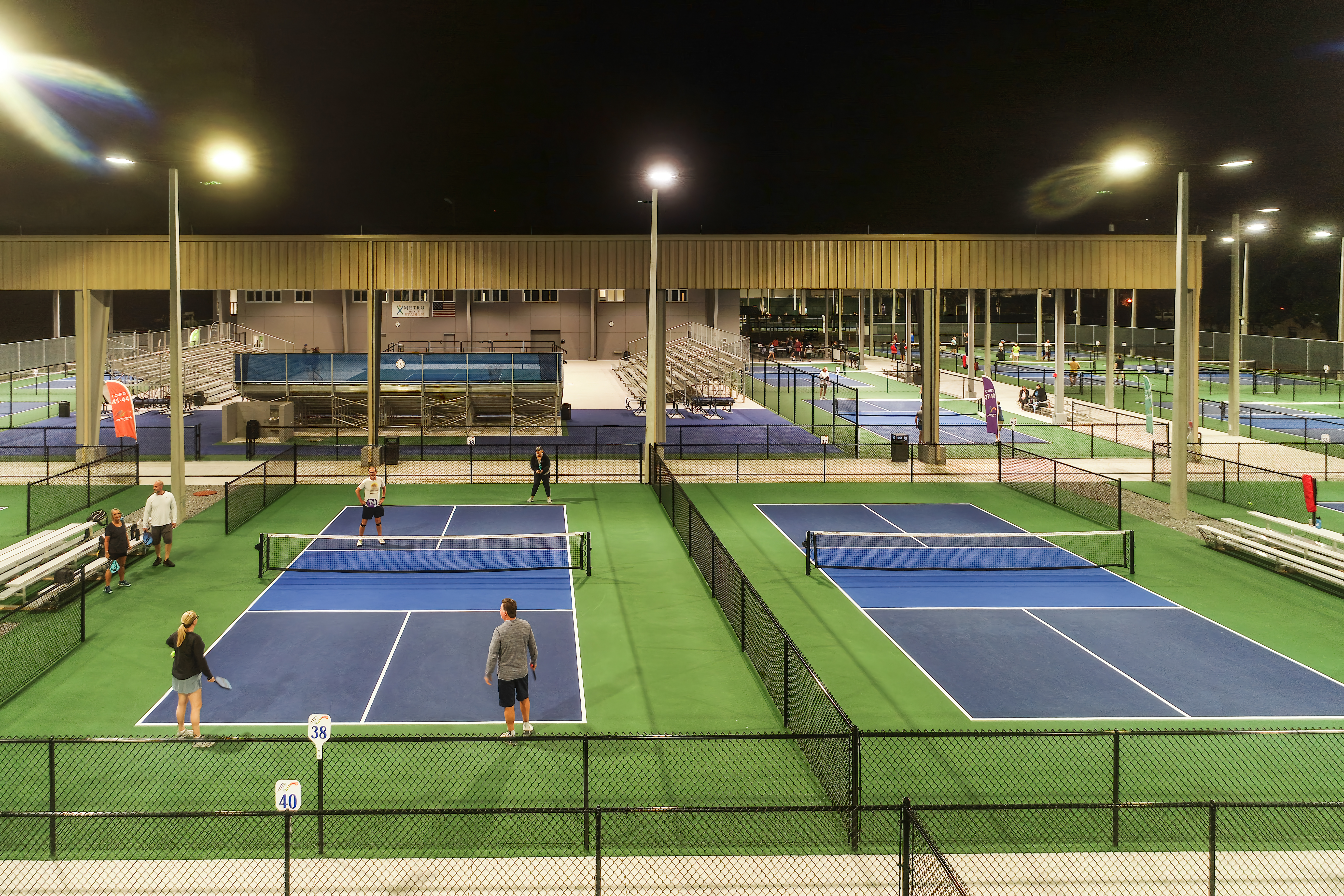
Since then, we’ve grown rapidly. By September we’ll have 39 courts across two locations. We purchased two former 60,000-square-foot tennis facilities and converted them entirely to pickleball. The tennis players in Cincinnati may not be thrilled, but the pickleball community loves it.

PCM: When it comes to programming, there are so many types: social, recreational, competitive. How do you recommend balancing those to get as many people as possible engaged?
MD: The answer is really simple: listening. There are two ways we approach it. The first is direct listening, just like you’re doing right now. We spend a lot of time talking with our members and hearing what they want, whether they’re a 2.0 player or a 5.0 player. Some of the best insights come from conversations that happen at the front desk, on the courts, or even at the bar over a beer. We believe strongly in the value of those casual spaces as opportunities to connect and understand what players are looking for.
The second way is through data. If you own a facility and use a platform like CourtReserve, which we rely on, it becomes a powerful tool. It tells you a lot about programming. A simple example is whether an event fills up and whether players return. If something fills once but no one signs up again, that’s a clear signal it isn’t what members want.
On the other hand, some programs take off immediately. Our Wednesday night beer league, for example, includes a free beer and is sponsored by a local brewery about ten minutes from the lodge. Every time we open registration, it fills within minutes with 96 players, each paying around $100 to join. That kind of response makes it clear what the community values.
Another important lesson we learned early on, thanks to advice from Devan Egan, is that the 3.0 player is the heart of our business. Listening to that group, at least as much as we listen to the 5.0 players, makes programming decisions much easier and ensures we’re building something for everyone.
PCM: What about scaling programs? What would be your advice there?
MD: Great question. Every club is different, and scale plays a big role. We have 23 courts in our first club, which gives us the flexibility to dedicate entire sections of the facility to specific types of programming while running something completely different elsewhere. One of the unique advantages of indoor clubs is that they solve a major problem for players, which is the weather. In Cincinnati, wind, rain, snow, ice, and heat are factors for much of the year, so offering a consistent indoor environment is a huge draw.
Our core program, and the most popular thing we offer, is open play. I think that’s fascinating because open play is often the first experience people have with pickleball at a municipal park. The problem with park play, though, is that it’s inconsistent. You may sit for long stretches waiting for a court, and the level of play can be all over the place. We solved those issues, and open play has become the foundation of our programming, something I never expected.
We kept listening to our players, scaling it up, and every time it filled. Now we run open play sessions throughout the day, typically at 7 a.m., 9 a.m., noon, 2 p.m., 4 p.m., 6 p.m., and 8 p.m., seven days a week, across eight or nine courts at a time. Even in a smaller facility, you could still dedicate four or five courts to skill-divided open play and see the same kind of success.
The key is structuring it well. We created clear skill divisions and limited sessions to six players per court, which ensures people are playing consistently instead of sitting around. Those two adjustments fixed the issues we always encountered at municipal parks. For example, just the other day Joe and I visited an eight-court facility at a local park. The people were friendly, but every court was filled with 2.0-level play. It just wasn’t a great experience. At our club, the structure ensures players find the right level of competition and get plenty of time on the court.
PCM: When you werecreating the beer league and other programs, how did you approach balancing fun, social formats with more competitive options?
MD: We really tried to put ourselves in the mindset of players at every level, from 2.0 and 2.5 beginners to 3.0, 3.5, 4.0, and even 4.5 players. I’ve personally gone through that entire journey, starting at 2.5 and working my way up, so I can still remember what it felt like at each stage. When you’re a 3.0 player, for example, the most enjoyable experience often isn’t high-pressure competition. It’s something more social, where you can play, relax, and then connect afterward. Whether someone chooses to have a beer or just a soda doesn’t matter; it’s about the environment.
That mindset shaped the way we built our programming. At the entry level, we start with Pickleball 101 for people who have never touched a paddle before. One of our most popular offerings is 2.0 Coached Open Play. It may not look like advanced pickleball, but it’s a fantastic product and fills up every time we offer it. We run it three days a week now because the demand is so strong. Players love having someone there to guide them and give feedback in a supportive way. We eventually rebranded it as “Pro Play” because we couldn’t resist.
The beer league was born the same way. Joe and I were asking ourselves what kind of experience a 3.0 player would want if they were looking to socialize and have fun, especially since we were adding a bar to the club. Beer felt like a natural fit. Both of us enjoy it, and it just clicked as a concept. From there, we applied that same mindset to every program we’ve built, thinking about what each level of player needs, whether it’s fun, social, or competitive, and then designing around that.

PCM: I was gonna ask you about how the coaching aspect comes into the programming. How many of your programs are with a coach or influenced by them?
MD: A lot. We built a concept at the heart of our business called the Ohio Pickleball Academy, which is essentially the brand for our instructional program. I think Denise mentioned ambassadors earlier, and that really resonated with me. No matter where you are, there are passionate players in the community who live and breathe pickleball. They may not be coaches yet, but they’re usually skilled players who love the game, and those are exactly the people you want at the center of your coaching program.
That’s how I found our first coach, Dave Tobin, who is still with us today. He was everywhere in the local pickleball community, playing constantly, and I noticed he had started informally teaching others. I thought, “That’s the guy we need at the heart of our business.” Today, we have about ten coaches like Dave who form the core of our academy. I’m biased, of course, but I truly believe we teach pickleball as well as anyone in the country. It’s because we’ve built a team of passionate players willing to put in the time, sometimes four or five hours a day helping others improve. Coaching isn’t for everyone, but for those who love it, it’s transformative.
Because of that, much of our programming now includes an element of guidance. Players want to avoid bad habits, and they want feedback as they progress from a 2.0 to whatever level they aspire to reach. Having dedicated coaches who can analyze play, get certified, and grow their teaching skills is critical. That’s why we put so much emphasis on instruction, and I think it’s one area that’s still underrated in pickleball.
Honestly, we just borrowed the idea from tennis. Instruction has always been central in that sport, and we saw no reason not to apply the same model. We like to call it the CASE method: copy and steal everything. Learn from others who are doing it well, adapt it, and make it your own. It’s a fast and effective way to build a strong instructional program.
PCM: Quick follow-up question: Are you finding that people are open to being coached at every level?
MD: Yes, but you need permission. There’s nothing worse than being at a public park and having someone start coaching you without being asked. It’s frustrating and uncomfortable. Permission is key.
That’s also why I think it’s valuable to have a clear brand for your coaching program. For us, it’s the Ohio Pickleball Academy. I’ll admit, we probably borrowed the idea from another state, but the point is that it creates structure and consistency. Now that we’re in two facilities, and soon to be more, we want that brand to stand for something meaningful and uniform across locations.
And it’s not just beginners who want coaching. I’m around a 4.25 player, and this morning I played with Dan, who’s over a 5.0. The gap between us was huge, and it made me want to close it even more. My serve, for example, needs a lot of work. The truth is, even advanced players are eager to keep improving. Instruction has value at every level.
PCM: When you think back to the early days of starting your club, once you had your programs in place and began scaling, what challenges did you face in keeping up with programming?
MD: I love that question. There are really two big challenges.
First, you have to be willing to fail. That means paying your team to experiment and giving them permission to try things that might not work. We emphasize a “yes, and” mindset rather than “yes, but.” Not every program is successful, and that’s okay. I personally track cancellations in CourtReserve because I want that constant feedback. The important thing is creating a culture where your team is comfortable testing new ideas, even if some fall flat.
Second, and this might sound counterintuitive for a club with 1,700 members at one location and more than 300 already signed up at another before it even opens, you have to accept that you will make some people unhappy. Programming requires taking court time that certain players might want for something else, and not everyone will agree with how it’s used. Even with 23 courts, you can’t make everyone happy. For smaller clubs with six, eight, or ten courts, that challenge is even bigger. The key is to remember that your facility is open many hours a day, seven days a week, and members need to be flexible, too.
At the end of the day, scaling requires pushing through fear. Every time we launch something new, there’s uncertainty. To manage that, we put a lot of effort into branding. I come from a brand background, and our director of operations is also a strong creative. So every program is packaged with intention: it’s visualized, named in a fun way, and communicated clearly. We use every tool we have: text, push notifications, email, on-site signage, and social media to explain not only what we’re offering but why. That approach has been key to scaling our programming successfully.
PCM: Last question, what are some of the programs you think will still be around in five years?
MD: I think Beer League will be around forever. It’s just a lot of fun. It runs on Wednesday nights, it’s casual, and it has grown into its own micro-community. We didn’t build it, the players did. They even created a trophy that gets passed to the winner every session, complete with engraved names. We had nothing to do with it, and that’s exactly what makes it great programming. All we did was facilitate, name it, and line up a sponsor. Add in the idea of a free beer each week, though we also offer non-alcoholic options or sodas, and it became a hit.
I believe most of our leagues will stick because the pickleball community is constantly refreshing. There’s always a ten-year-old discovering the sport, a sixty-year-old looking to improve, or a 4.25 player striving to reach 4.5. That ongoing influx and progression of players keeps demand alive, and as long as we’re creating programs that help people at every stage and age, those programs will last.
If I have one frustration, it’s our challenge in keeping kids engaged long-term. But I think that’s going to change. As college programs, facilities, and even scholarships become more common, younger players will start taking pickleball more seriously. Right now, kids in Cincinnati are focused on becoming professional soccer, basketball, or lacrosse players: goals that very few will actually achieve. Ironically, they’d have a much better chance of becoming professional pickleball players if they started early.
At the end of the day, we’re open books when it comes to programming. Joe and I get “borrowed from” all the time, and we take it as flattery. If anyone’s looking for ideas, we’re always happy to share.