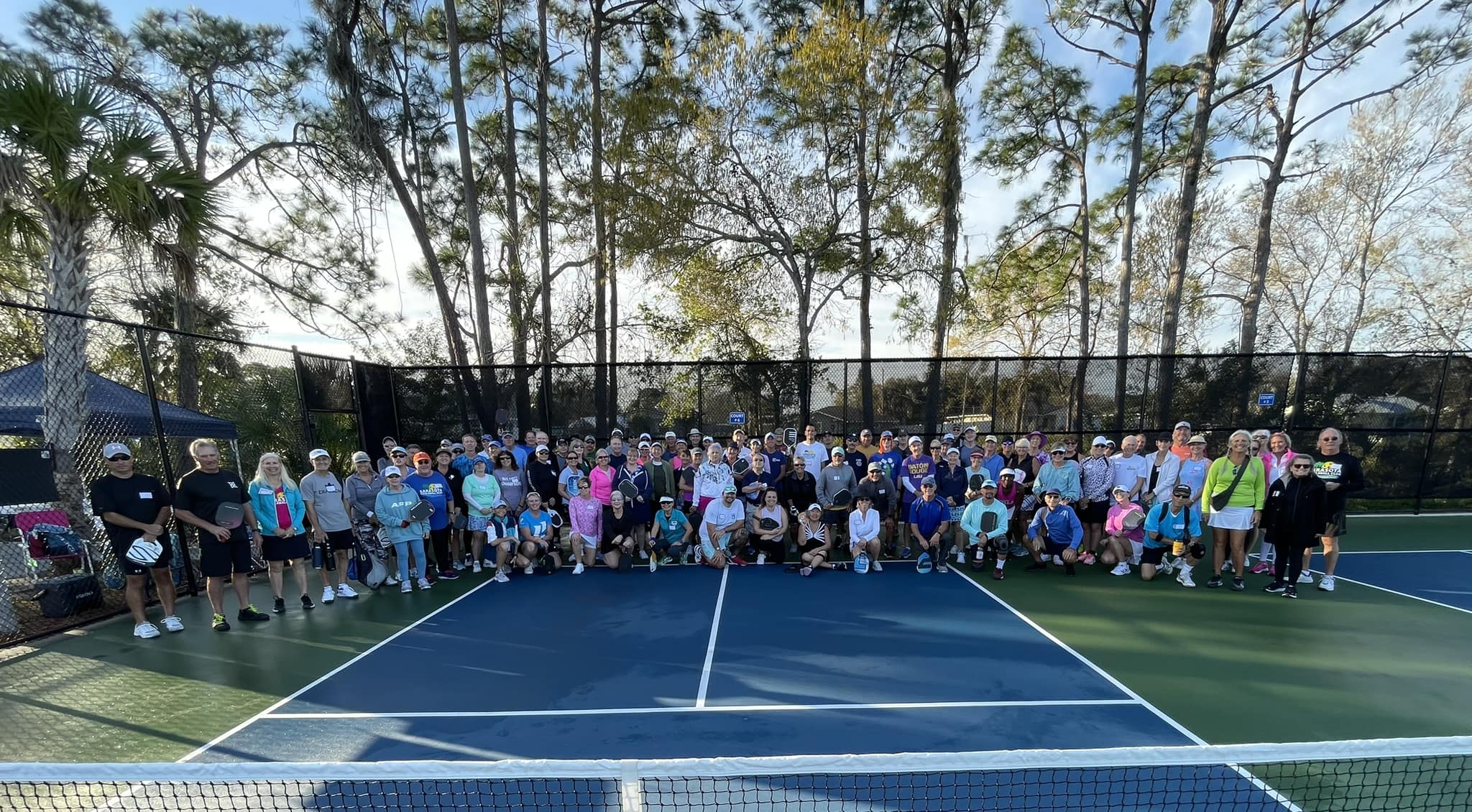
A Florida centralized business claims the title of having the most pickleball courts and facilities under active development in the United States. The Pickleball Club of Sarasota plans to open its third location towards the end of 2024 and owns six more locations in permitting. These locations include 115 courts and counting, as well as over 300,000 sq. feet of real estate. The Pickleball Club was founded in 2019 by Matt Gordon and Brian McCarthy, and has expanded rapidly since then. “In addition to our own capital (of course), we’ve been very fortunate to have received tremendous support of equity investors from all across America,” said CFO and co-founder Matt Gordon when asked how he financed his business when it first started. Equity investors play a crucial role in large scale projects due to the support that they provide growing businesses.
In addition to equity investors, another stepping stone to building a secure foundation is finding loan guarantees. “Our first facility received a loan guarantee from the US Department of Agriculture Business and Industry Loan Guarantee program. That was key in getting the lender’s confidence for getting that first deal done,” Gordon says. Loan guarantees are important to have in order to secure better loans or interest rates. When attempting to jumpstart a club or make a large expansion, loan guarantees are pivotal due to the support and authenticity that they represent to major lenders.
According to Gordon, the straightforward way to finance your business is, “Cash, cash and more cash. The typical financing will be equity and debt. Some smaller operators are selling advanced membership with special privileges to help a bit. Opportunistically, people can take advantage of programs to help.” The Pickleball Club is a private, luxury club, so the membership rates and revenue are crucial to creating funds for expansion. In its current state, the revenue that the business makes goes straight back into the company. Gordon adds that “If the cost of external capital is high, then it will make sense to plow back free cash flow, if it is not, then we would pursue dividends/distributions to our ownership group.” When the club desires to expand, “Each club (both the realty and the operations) is owned 100% by our parent entity. Accordingly, our parent entity provides the capital required by each club for development. We then pair that with debt at the club level,” Gordon highlights. Having a parent entity provides a solid structure to create and add clubs. The main downside of having a parent entity is that a certain amount of control or ownership is lost in return for the funding.

Tax benefits are a lesser known aspect of financing a pickleball club, but can be extremely beneficial. Many sports organizations qualify for major tax benefits in the US, especially if they include educational content or help develop amatuer athletes. The Pickleball Club is a “private social club (like a country club) with a focus on pickleball game play and the socialization with people who share common interests…”, and “currently [utilizing tax benefits] isn’t our focus” Gordon claimed. Despite this fact, he also acknowledged that, “In the future, there may be opportunities that could generate these types of tax benefits.”
The chief principle of building a club is to plan ahead and account for unknown expenses. Gordon says, “don’t underestimate how much it will cost and how hard it is. In particular, operations. There are no templates today. It takes a lot of work and expense to get it all working. This is not an undertaking for the unwary.”
Finding financial support is crucial for starting a pickleball club. Equity investors and loan guarantees can assist in speeding the process along, but the deciding factors of what makes an endeavor successful are cash and competency.