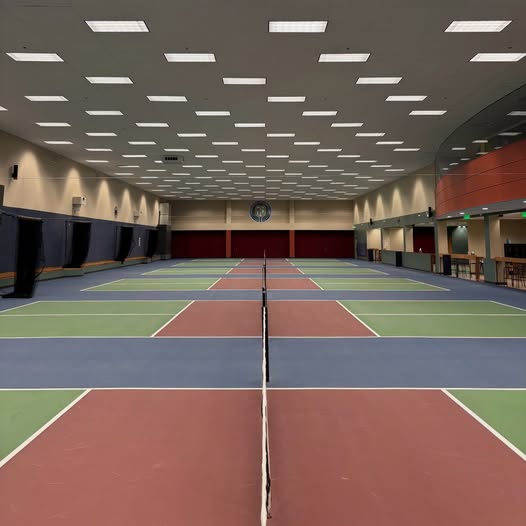
Cotton Mill Pickleball is North Mississippi’s premier four-court indoor facility. Initially, plans were to make the building an upscale bowling alley; however, the widespread success of pickleball convinced the owners to choose differently. Cotton Mill Pickleball opened in February of 2024 in Tupelo and has since evolved into the tight-knit community today.
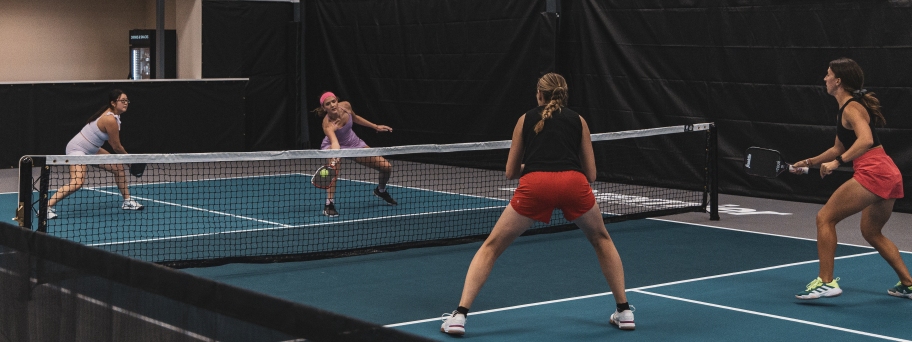
The facility is cozy with four outdoor surface indoor courts, heating and air conditioning, semi-permanent nets, ping-pong, and seating around the perimeter for viewing and hanging out. Membership grew primarily through word of mouth and social media. Cotton Mill has 90 members: “Anytime they want to play, they can play”. The challenge is finding that “sweet spot” of having several people to play with and available court time. Maintaining a limited membership roster also makes it easier for all members to know one another and thus have a closer sense of community.

Cotton Mill is a small club with a strong sense of community. Julie Halbert, one of the founders, remarks that creating a “sense of community” was the club’s primary aim from the beginning. Anyone familiar with the pickleball world knows that pickleball has the power to bring all sorts of people together, and Halbert notices that people are “hungry” for that communal feeling. Besides forming a solid community, Cotton Mill hopes to hold fundraisers to support local charitable organizations with various pickleball events, and they are beginning to achieve that goal.
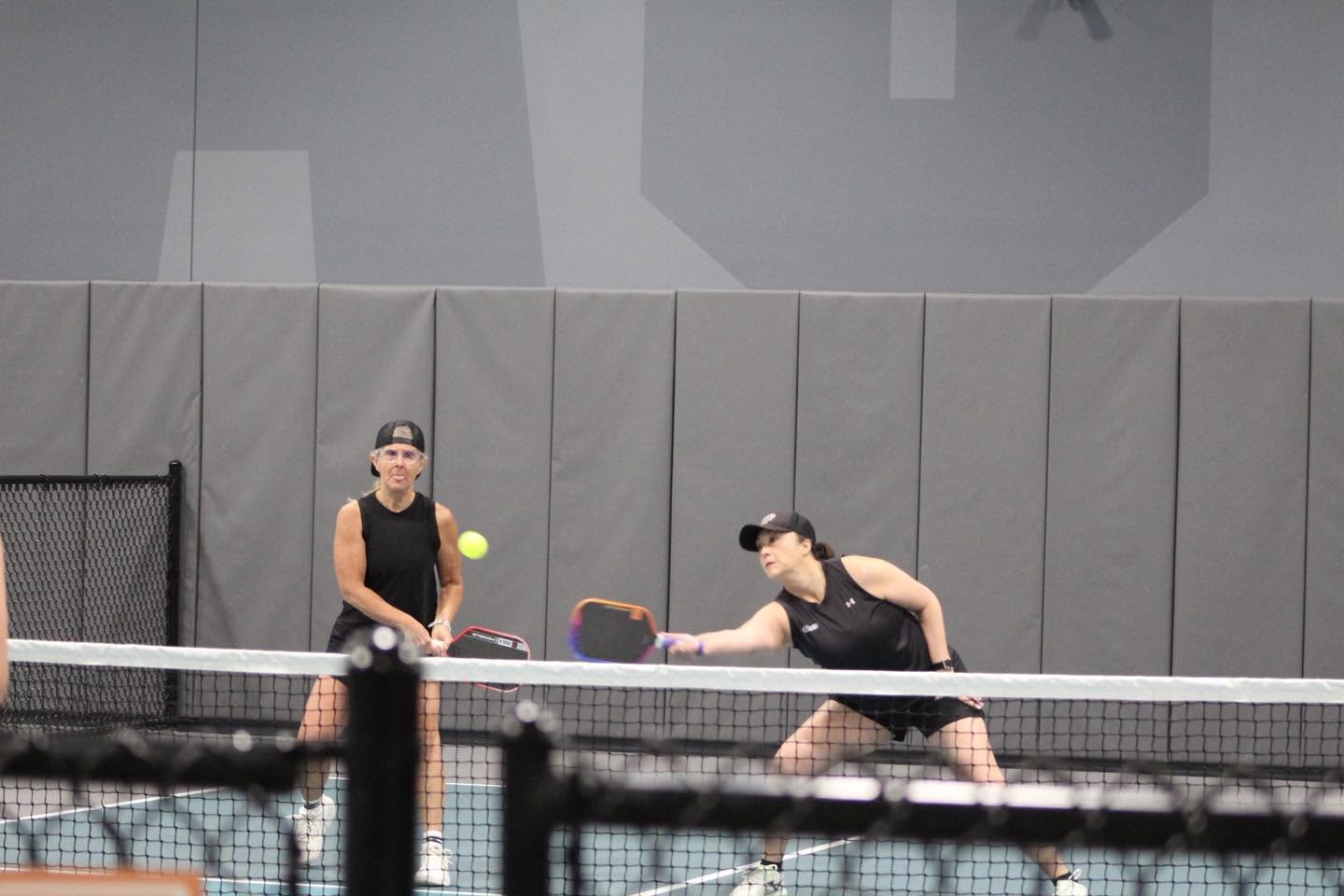
On August 3rd, Cotton Mill Pickleball hosted a round-robin tournament for an adoption fundraiser. Halbert’s son (Keaton) and his wife (Sarah Rice) are in the process of adopting a child. Anyone who has attempted to adopt knows that the process is long and expensive, so Cotton Mill hosted a fundraiser to support the couple.
The fundraiser tournament included a 3.49 level and under group and a 3.5 level and over group. Each group had 16 participants and divided play during the morning and afternoon. The brackets were six rounds of games played to 15. Keaton organized the games on the Matchup app and displayed player standings on a big-screen TV so everyone could get excited as they watched the names rise and fall. The cost to play was $40/player, but many contributed more, and some winners donated their cash winnings back to the cause.

The Cotton Mill plans to host fundraisers for several more causes this year including Fellowship of Christian Athletes, Cystic Fibrosis, and various mission trips.
Halbert offers a few pieces of advice for owners of smaller clubs who want to focus on building a healthy community. First, listen to your members. They can offer a variety of ideas that are always worth trying. Second, consider offering discount membership options for those who would benefit, such as retired educators, military personnel, and first responders.
As pickleball grows, it often becomes more competitive and high-scale, but clubs like the Cotton Mill are a fantastic reminder of pickleball’s ability to unite people in a close community