In Texarkana, Texas, six public pickleball courts revealed a pattern many communities are now experiencing. What started as a simple conversion from aging tennis courts quickly became one of the busiest recreational spaces in the city. Every evening, the courts filled, players waited, and the parking lot overflowed. The demand was obvious, but the experience was not.
Play operated on a first come, first serve basis with no rotation system and no structure. Beginners struggled to break in, experienced players found inconsistent games, and many left without playing at all. The sport had momentum, but the infrastructure, both physical and operational, had not caught up. That gap led to the formation of the Texarkana Pickleball Club, and in doing so, created a clear example of how a town’s pickleball ecosystem evolves.
The club launched with a simple goal. Organize the growing player base, improve the experience on existing courts, and raise some money for basic upgrades. Early expectations were modest, with leadership hoping to reach around 200 members in the first year. Instead, they hit that number within a few months.

Growth came almost entirely organically. Players were already gathering at the courts, and awareness spread through a local Facebook group and word of mouth. Just as important, the club made it easy to join. A simple online sign up process allowed players to register in minutes. For operators, the takeaway is clear. When demand already exists, reducing friction matters more than increasing exposure.
The club’s initial value was not access. The courts were public. The value was structure.
Working with the city, the club secured designated weekly time slots where play could be organized. Volunteers managed rotations, encouraged mixing, and kept games moving. That shift turned a chaotic environment into a reliable one. Members knew they would get on the court and have a consistent experience. That alone justified the club’s 25 dollar annual fee.
“It’s not just chaos anymore,” says board member Clay Sandefur. “People know when they come on our nights, they’re going to get organized play.”
This stage, organized open play, is a critical step many markets overlook. Before new courts are built, there is often an opportunity to create immediate value simply by managing existing demand more effectively.
From there, the club expanded into events. Tournaments became a key focus, raising the level of play and introducing structure beyond daily recreation. Drawing on experience from tennis, the club emphasized well-run events, which helped attract players from outside the area. This not only strengthened the local scene but also demonstrated something important to city leaders. Pickleball could drive economic activity.

That progression from open play to organized events helped shift the club’s long-term vision. Initially, the goal was to fund small improvements like shade and seating. But with courts consistently full, it became clear that expansion was the real need.
Funding that expansion required proof. Early conversations with potential partners were met with hesitation. Without a track record, the project was just an idea. That changed as membership grew, courts stayed packed, and tournaments gained traction. The story became tangible.
“Once people saw the demand and what we were building, it became something they wanted to be a part of,” Sandefur says.
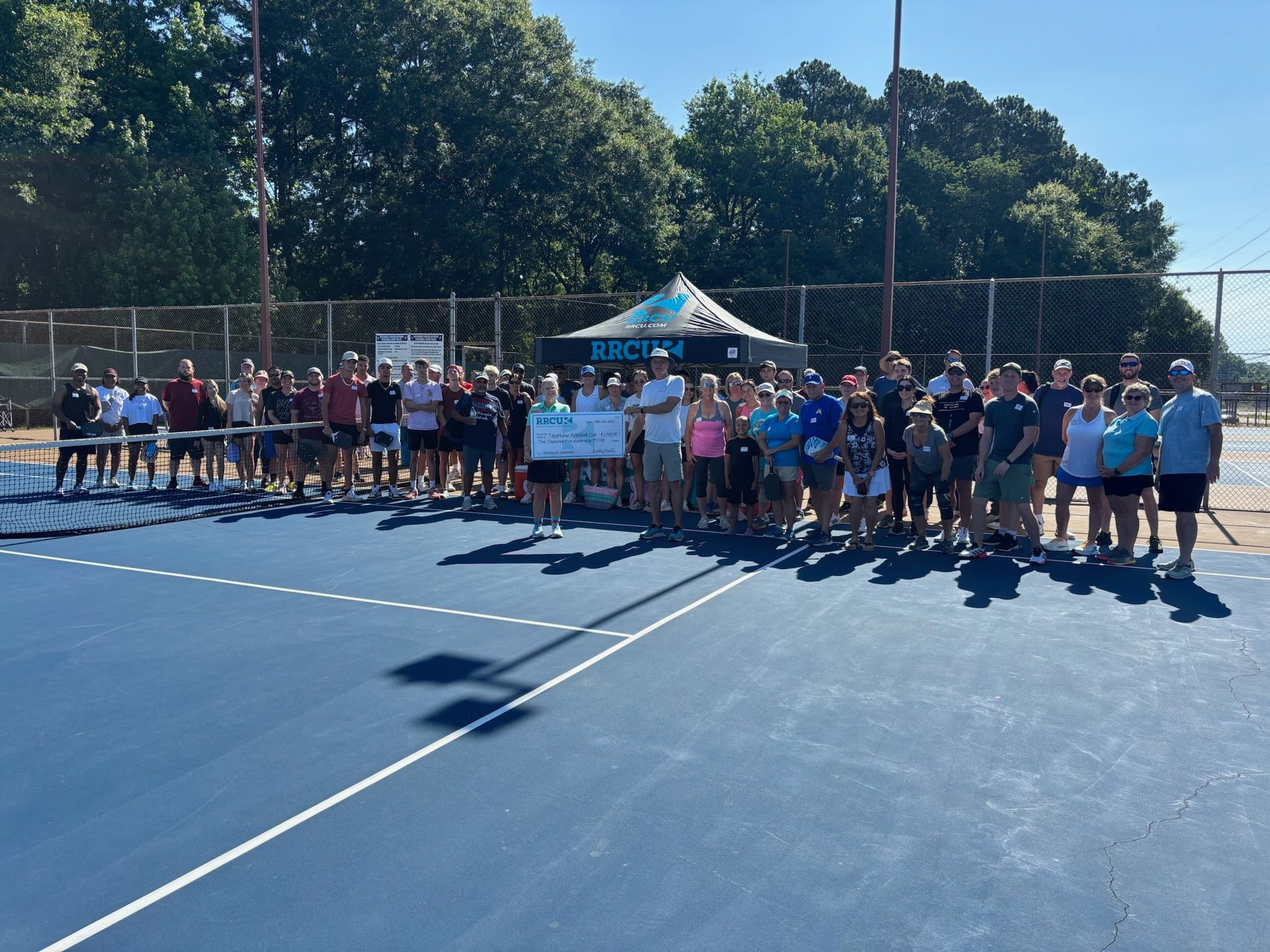
The club leveraged relationships across the community, engaging businesses, civic groups, and private foundations. Some contributed funding, while others donated services, including major cost items like site work and lighting. The city played a key role, agreeing to match funds raised by the club up to a significant amount. That partnership accelerated everything.

In less than a year, the effort generated a six-figure budget and led to the development of eight new courts alongside the original six. The result will be a 14-court complex, a scale that positions Texarkana well beyond what is typical for a city of its size.
For operators, the sequence is more important than the scale. Texarkana did not start with a large facility. It started with overcrowded public courts, then moved to organized play, then to events, then to fundraising, and finally to expansion. Each stage built credibility for the next.
Now, with construction underway, the focus shifts again. Programming will define the next phase. Additional courts alone do not guarantee success. Leagues, clinics, and consistent event scheduling will be necessary to fully utilize the expanded facility and maintain engagement.
There is also a broader economic layer. The city’s investment is tied in part to tourism, with the expectation that larger tournaments will bring in out-of-town players. That alignment between recreation and economic development is becoming increasingly common and provides a useful framework for other operators working with municipalities.
Texarkana’s story highlights a repeatable model. Public courts create access. Overcrowding exposes the need for structure. Structure builds community. Community drives membership. Membership creates leverage. And leverage unlocks funding.
The Texarkana Pickleball Club did not create demand. It organized it. And in doing so, turned six crowded courts into a roadmap for sustainable growth.