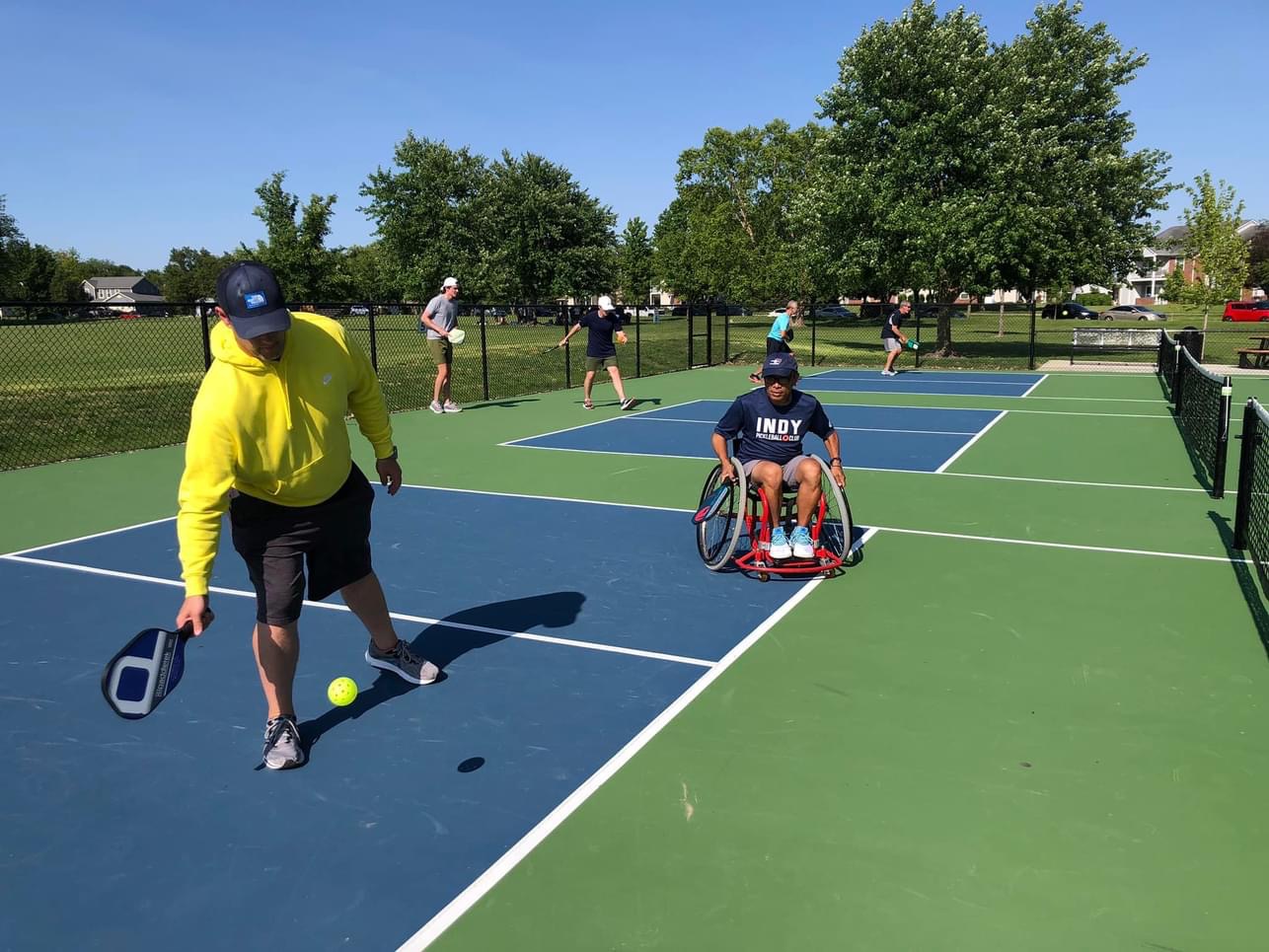
As a non-profit pickleball club whose goal is to promote the game in their community and create opportunities for play through leagues, tournaments, and recreational play, Indy Pickleball Club has found intentional goal-setting to be a vital tool in the success of their club. Working to grow the sport in Central Indiana, Indy Pickleball Club’s primary “objective is not to make big money but to get pickleball spread” throughout the area, says Lisa Farley, President of Indy Pickleball Club. With a clear vision for the mission of the club, the board members were able to lay out concrete and tangible goals for Indy Pickleball Club to help drive progress toward their ultimate aim.
The club’s origins began in the 2015-2016 timeframe when a group of local players came together to play pickleball regularly in their community. At the time, they were using city courts in Fishers, Indiana, with four available for use at the time and plans to expand to eight courts. Formalizing the club and talking about the sport in the local media became of high priority to that initial group of players, many of whom became board members, because there were few places to play pickleball in Central Indiana at the time. Marcus Woodhouse, the club’s initial president, worked diligently to put together tournaments and get people in the community interested in pickleball to drive the popularity of the sport and promote the need for more access to play. When the club first began, their primary goal was to have their own facility, with additional supplemental goals in support of their overall mission helping to bolster their path toward owning a facility of their own. While this goal has changed slightly due to changes in the club’s operating environment and needs of the local pickleball community, Indy Pickleball Club’s overall mission remains steadfast: “To grow the sport of pickleball in Central Indiana.”
From the beginning, the Indy Pickleball Club Board was upfront about their goals for the club and the change they wanted to see in their pickleball community. Some principles that helped them shape their original set of goals included not being a money-making venture and wanting to be known to people visiting the area as the prime pickleball group in Central Indiana. Indy Pickleball Club sought to galvanize members to support their club while also serving the public through providing additional opportunities for pickleball play.
These guiding values helped the board define a list of both short term and long term goals that they keep posted on their website for members and guests to view. Included in their short term goals, which were set to be completed in the 2019/2020 timeframe, were items such as converting the club into a 501(c)(3) organization, supporting local tournaments with club volunteers, creating a monthly newsletter for members, and liaising with city officials and parks and recreation departments to identify additional resources for pickleball in the community. To this end, Indy Pickleball Club “helped create programming at a city park that has been really amazing,” says Farley. Additionally, the club successfully became a 501(c)(3) and has made it a regular practice to back local tournaments. One short term goal they have not met yet is to have 500 club members. However, Farley believes that with the coming of the “new facility, [they] will be close” to achieving a membership base of 500 individuals.

Long term, Indy Pickleball Club’s goals looked as such:
2021: Raise over 5 million dollars to build one Indy Pickleball Club Complex (IPCC), which will include 16 dedicated indoor and 16 outdoor pickleball courts.
2023: Build IPCC!
2024: Indy Pickleball Club to run both local and national pickleball tournaments inside the IPCC!
2025: Indy Pickleball Club to continue to increase both indoor and outdoor pickleball courts at the IPCC.
As previously mentioned, some of these goals have shifted over time as the club has sought to adapt to the growth of the sport. For example, the board has determined it is no longer prudent for the club to own their own space but rather their aim is to reside within another organization’s facility. One overarching goal that has remained unchanged is their desire for an “identifiable place and location” to house Indy Pickleball Club. This aim will be realized with the opening of a new pickleball facility in the area called Indianapolis Pickleball Club, which will house Indy Pickleball Club and is providing use of the space without a lease. Their hope is that this new facility, run by a separate organization, will be a singular place in which club members can gather to play and foster community.
Over the years, Indy Pickleball Club has benefited greatly from their board’s purposeful goal-setting process, particularly in terms of determining how club resources are allotted. Focusing on helping their community and filling in needs where they see fit, Indy Pickleball Club seeks to be as deliberate as possible with how their time and money is spent. Further, Farley highlights that having such explicit goals allows the board to regularly look back and see if their current activity is moving them toward their goals. The Indy Pickleball Club board meets every six weeks or so to discuss goals and review the club’s progress toward specific objectives. Additionally, the club includes updates about their goals in their newsletter for members to stay apprised of the club’s progress and inform members about where the club is headed in the future.
Serving their members well is at the top of the board’s mind when approaching goals. Farley acknowledges that “some [members] do not feel like [they] do enough, but [she] think[s] that has changed” as the club has pressed on with their mission to spread pickleball in the community and create more access to the game. One area of focus for the club is to continue ensuring member benefits even while they seek to promote pickleball within the public.
To successfully identify and achieve goals as a pickleball club, whether you are an established club or just getting off the ground, Farley notes that it is imperative to have a “variety of voices at the table.” As Indy Pickleball Club grew in size, the board realized there was a gap in perspective from lower level players so they intentionally brought less experienced players into their decision-making process. Moreover, Farley recommends that each club identify and maintain “somebody who is willing to be tenacious” among their leadership team to ensure the necessary steps are being taken toward progress on their goals. While each club’s goal-setting strategy is going to look vastly different, as will the specific goals themselves, there is a lot to be learned from Indy Pickleball Club’s approach toward club objectives as they have made significant progress toward their overarching mission throughout the years.