Every pickleball club has a favorite event, and likewise, most players have a version of pickleball that they prefer. For the Gwinnett Pickleball Club, their preferred way of playing pickleball is through ladder leagues. Ladder leagues are at the very core of Gwinnett Pickleball’s life and culture. Brian Garrett, the owner of the club, goes so far as to say, “Ladder leagues are the heart of my club!” Ladder leagues have fostered both strong community and engaging competition in a cost-effective manner at Gwinnett.
When asked to describe what makes ladder leagues special, Garrett opted to highlight their competitive and low-maintenance aspects. In ladder leagues, when players win they move up the ladder, and when they lose they move down the ladder. Thus, those hosting the event don’t have to worry about creating even matchups because the ladder naturally shifts the higher-skilled players to the top courts and the lower-skilled ones to the lower courts. Garrett says, “As an organizer, I don’t have to deal with people complaining that they should be playing on a higher or lower court; the ladder sorts that out. If you’re as good as you think you are, you’ll move up.”
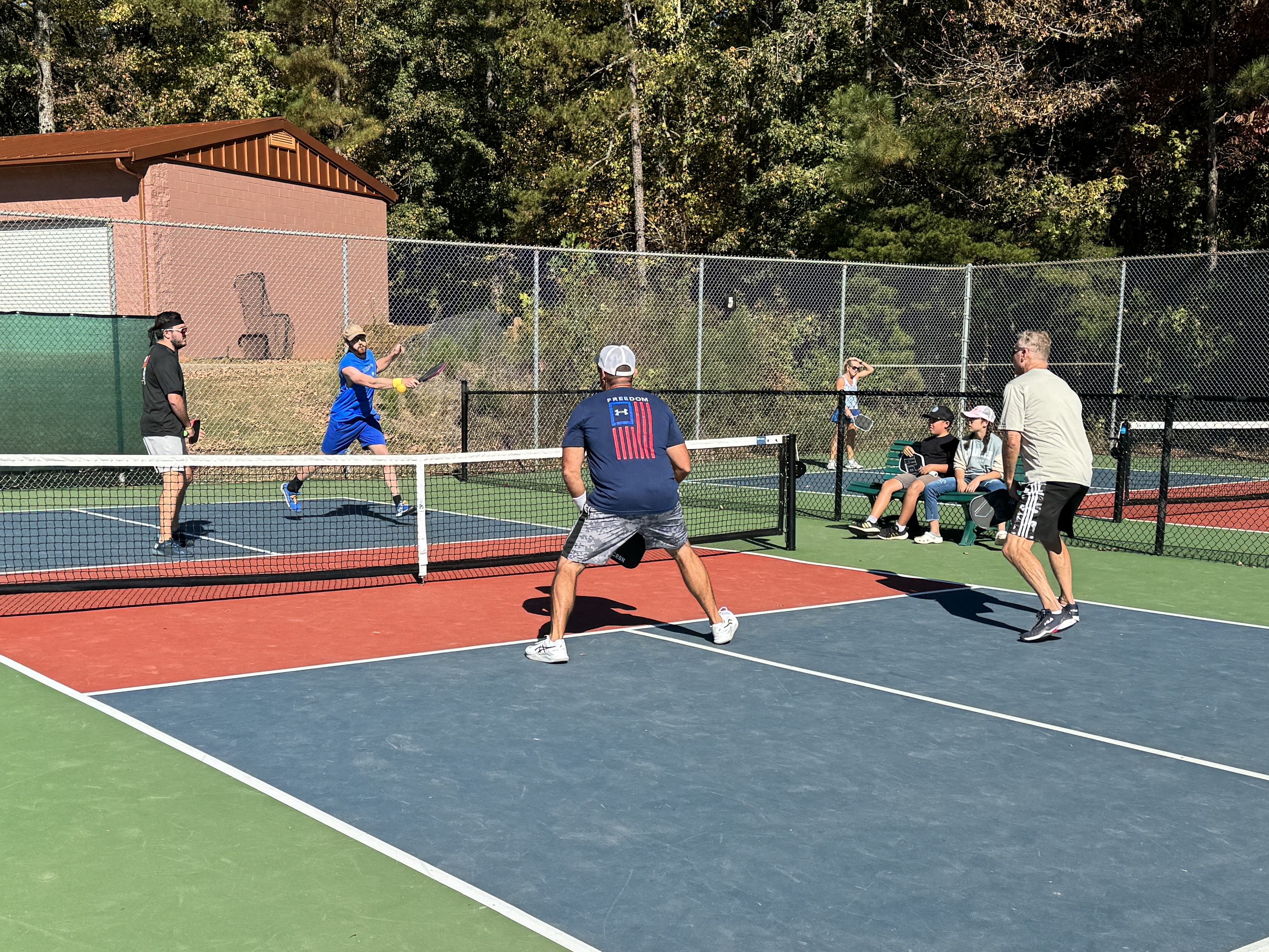
Open play is likely the most widely played version of pickleball, but ladder leagues may be a suitable next step for owners who want to increase their club’s level of competition. Depending on who shows up to open play, some very competitive players might get matched up with players with significantly less skill or experience. In this case, either the more experienced players will dominate the newer players, or the experienced players will let up and take it easy on them. In either case, the competitive aspect is lacking. Ladder leagues fix this by constantly shuffling and shifting players according to their performance and skill level. Garrett affirms that ladder leagues are more competitive than open-play games. He says, “In open play, if I have a weaker player on my court, I’m going to give them appropriate shots, rather than just crushing them. But in a ladder, the goal is to win, and I’m going to play my best in every game.”

Competition is greatly valued by experienced players who are excited about their growing pickleball skills, but pickleball is not just about fierce competition. The social and communal aspects of pickleball have been some of the most important ingredients to pickleball’s success. As shown above, ladder leagues are tremendously helpful for increasing competition, but they are also helpful for striking a balance between competitiveness and sociability.
Successful club owners often have an expressed vision for their club. Brian Garrett’s primary goal for the Gwinnett Pickleball Club is “to build a strong community of players.” Ladder leagues play a pivotal part in his mission. Because Garrett’s goal is to grow the community rather than make money, he only allows Gwinnett Pickleball Club members to sign up for and participate in ladder leagues. Member-exclusive leagues allow for the same people to see each other frequently, build relationships, and improve the community. In ladder leagues, players are constantly rotating and changing partners, and with these constant changes come opportunities for new relationships. Garrett finds that ladder leagues are a “great blend of competitive and social play.”
So what does it take to run a ladder league? There are various ways to run a pickleball ladder league. Ladder leagues can be single-day events or multi-week affairs. Many clubs, like Gwinnett, use organization software to help run their ladder leagues.

Garrett recommends a software called Pickleball Den. He applauds them both for their user-friendly interface and helpful staff. At the beginning of ladder leagues at Gwinnett, Garrett used Microsoft Excel to organize his ladder leagues; however, he struggled to run the leagues efficiently. He later found Pickleball Den which made setting up ladder leagues “super easy and fun.” Pickleball Den has also helped Garrett to “manage club memberships and facilitate communication.” One challenge of running a ladder league is that often times people who sign up do not actually show up. This creates the need for a new pool. Some systems, like Excel, struggle to adapt to changing circumstances, like player no-shows. But Pickleball Den helps Garrett avoid this problem by creating live pools and ladder standings based on the players that actually show up.
Ladder leagues have their special challenges like no-shows and initial pool organization. But they also have certain aspects that make them easy to implement. Many leagues require players to have a fixed partner, and when a partner can’t make it, the players and league organizers are burdened with finding replacement partners. Ladder leagues tend to avoid this problem. Ladder leagues are much more flexible in this area because they usually don’t require fixed partners since partners are constantly switching. Garrett says, “As an administrator, the ladder structure is nice because I don’t have to deal with substitutions for players who can’t make it one week.” If aspiring ladder league hosts find solid software, like Pickle Den, then they will be able to enjoy all of the benefits of ladder leagues without undergoing the difficulties.
Though the Gwinnett Pickleball Club prioritizes ladder leagues, they recognize that open play is still a vital part of pickleball’s success. Garrett says, “I’m still a HUGE proponent of open play. It’s critical to the success of pickleball as a sport.” The benefits of ladder leagues don’t make open play obsolete. However, ladder leagues are a viable next step for owners who want to boost the social and competitive aspects of their clubs in a cost-effective way. Garrett remarks, “For me, the success of the ladder league is easy; players love it! People love knowing that they’ll get to show up to the park and play a bunch of competitive games.”