


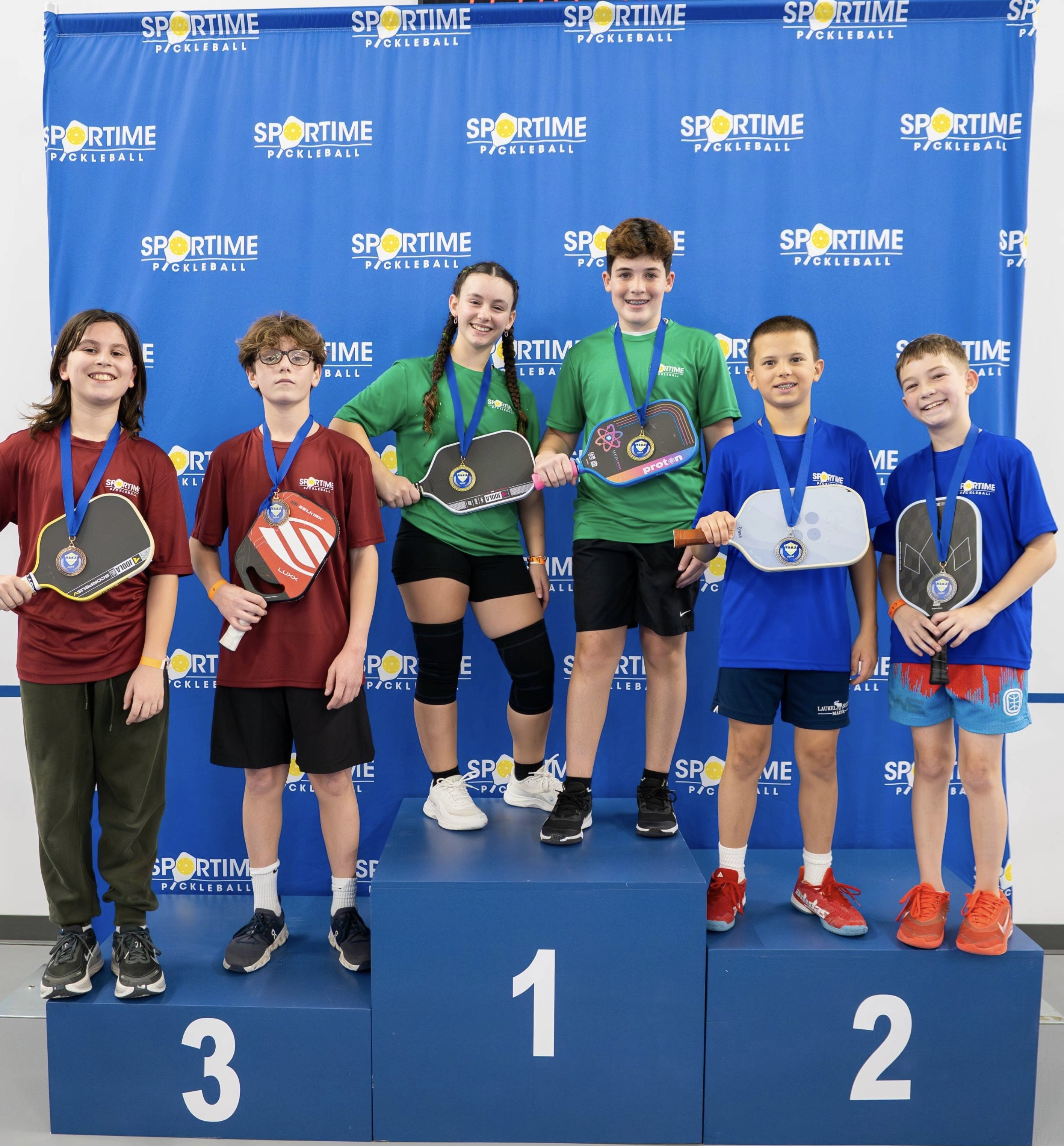
Pickleball’s social nature lends itself easily to leagues, tournaments and social interaction. However, it is still an individual sport, and quite often, despite most games playing using a doubles format, the sense of a larger team spirit is missing. And while popular with older players, many facilities are working through how to attract, and retain, younger players on the court. SPORTIME Pickleball, with six locations throughout New York and New Jersey, has developed a program that addresses these two challenges in one fell swoop. They are offering competitive interclub junior teams that create a fun and competitive environment while bringing younger players into the pickleball world and retaining them.
SPORTIME’s Junior Team Pickleball (JTP) is inspired by a successful youth volleyball program Joe Siegel, Senior Managing Director and part-owner of SPORTIME, started in 2010 that is still thriving. JTP is a tryout-based program for ages 10-15 that offers structured training and supervised match play 1-2 times per week and multiple interclub tournaments throughout the JTP season. All players receive a JTP duffle bag filled with team gear that helps build a sense of team pride.
“JTP is a new way for kids and their families to think about pickleball that has already proven to be successful in other sports,” Joe says. “Creating an ‘only here’ experience can help set your club apart from others to retain current members and gain new ones.”
A leading reason SPORTIME is finding success with its interclub program is strategic planning. SPORTIME is home to six dedicated pickleball clubs, all within a one-hour drive from each other, thoughtfully located on Long Island in Westchester, and just over the state line in New Jersey. With a total of 78 courts available to members, the court time availability and proximity to each other make it easy and convenient for families to drive to competitions.
Five of SPORTIMES’s six pickleball clubs currently participate in JTP with multiple divisions and a structured tournament format. What makes it special is the friendly interclub play with each team wanting to win for “their” club.
“JTP creates excitement and purpose for training, creates new friendships and builds a sense of club and team pride as well as repeat participation,” says Joe. “Players want to move up to the next level or compete against teams from another club. JTP practices provides the club with consistent programming compared to drop-in programming that may occur to simply fill time on a Wednesday night.”
SPORTIME has created a pipeline to help young members get into the sport. From Pickleball 101 for beginners to a JTP-prep class for players looking to get more involved with the program. The club also offers camps and seasonal programming to drive and maintain interest in the sport. This year the club has just about 100 players with 50 new players registered for spring program tryouts. Joe predicts participation numbers could grow to 500 in the next three to five years based on current participation rates.
As evidenced in other sports, team-based play works for many reasons, mainly by converting an individual sport into a social experience that naturally creates a group of friends and a sense of belonging. The resulting consistent attendance also creates an emotional connection to the club, compounded by the team spirit formed through competitive play at interclub tournaments.
Besides providing younger players with an opportunity for physical and social gains, it also provides financial stability for the club. Predictable revenue from longer programs, tournaments and consistent sign-ups is more reliable than drop-in play for a club’s bottom line. The team-structured environment also encourages players to continue training to keep improving and performing well for their respective teams.
All around, it’s a win for the club and the players.
Clubs with multiple locations can start to build interclub play at any time. Single-location clubs can still learn from the JTP model by structuring a youth league within their club. Consider creating teams from local schools for friendly competition and bragging rights or other exclusive programming that sets your club apart from others. Most importantly, though, a structured pathway into the sport is essential for younger players and a reason for them to keep returning and growing their skills.
Youth participation is the foundation of sustained success for pickleball. As the sport grows through high school, college and leading to pro pathways, clubs that invest early will gain the biggest long-term wins. Thinking strategically about your population and your programming opens a door to new players this year and for years to come.


One thought on “How SPORTIME’s Interclub League Model Drives Revenue and Youth Growth”