If you only read the headlines, 2026 still looked like a boom year. Participation was up. New clubs kept opening. Courts were full, or at least they looked full from the parking lot.
If you actually run a club, you already know those headlines stopped describing your Tuesday a while ago.
That is the thread that ran through every issue we published this year, and through the 2026 State of Pickleball report we put together with club owners and operators. Growth is not slowing down. It is getting more complex. The easy wins are behind us. What separates a durable club from a short-lived one now is how well you manage scale, culture, capital, and community at the same time.
This is the first of three short looks back at what those stories made clear. We are starting with the one I heard all year, in one form or another: a club can be busy and still leave money on the table.
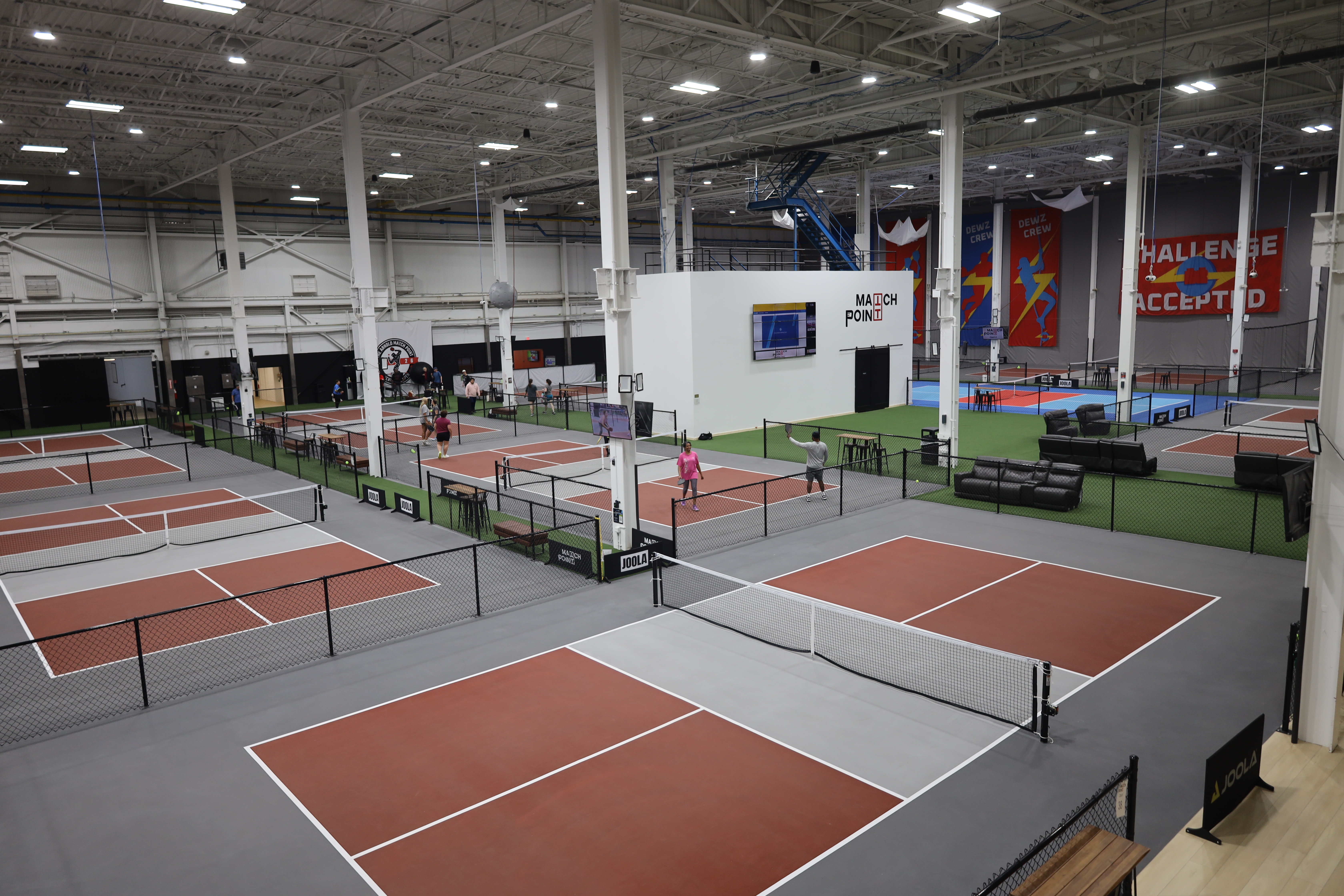
Bill Taylor saw that clearly at Match Point Columbus, the 38-court facility we wrote about in our March/April issue. Mornings and weekends can look packed and still leave a hole in the middle of the day. Taylor’s fix was almost stubbornly simple. Open play during the traditionally slow hours between noon and four cost just three dollars.
“People thought I was crazy,” he told us.
They weren’t empty for long. The club started seeing consistent traffic in those afternoon hours. “I’m having people pay me three dollars to advertise for me,” he said. “They go out and tell their friends.” Weekend matinee sessions, at five dollars for non members, regularly reach capacity and build a waiting list.
That is the quieter problem a lot of owners already feel. The club can look healthy from the parking lot and still be giving hours away. Once those hours pass unused, they do not come back on Saturday. They are just gone.
Our survey of 37 club owners, franchisees, head pros, and general managers said the same thing in a different way. Nearly six in ten expected their club to grow over the next year, but the most common rating was a cautious 7, not a 10. The thing they were most worried about was not whether demand exists. It was whether they can serve the demand they already see.
The two biggest threats in that survey pointed in opposite directions. The most cited concern was facility capacity: not enough courts of the kind players actually want. The second was the opposite problem, too many new facilities crowding the same regional markets and dragging pricing power down with them.
Those two pressures sound like they should cancel each other out. They don’t. They are the same maturation curve seen from opposite ends, and learning to operate inside it is the new job.
You could see both sides in the clubs we profiled. In St. Louis, a mall demolition forced Arch Pickleball out of six courts. “Being forced to leave Chesterfield Mall was difficult, but it also gave us an opportunity to rethink everything,” owner Marshall Pan told us. Looking back, he said the move “may have been one of the most important catalysts in Arch’s growth.” The club has 24 courts today.

In other markets, owners were already asking a harder question than “how do we get people on court.” They were asking how to stay distinct when the club down the road has the same number of courts you do.
That is the tension I kept running into this year. Demand is still there. The operators who are doing well are the ones treating court time, capacity, and competition as a business problem, not just a scheduling one.
In part 2, I want to get at the other side of that: why the clubs that hold their people are not winning on marketing.
See you on the courts,