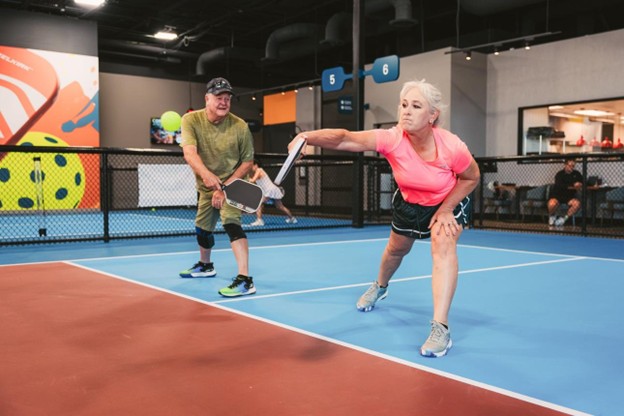
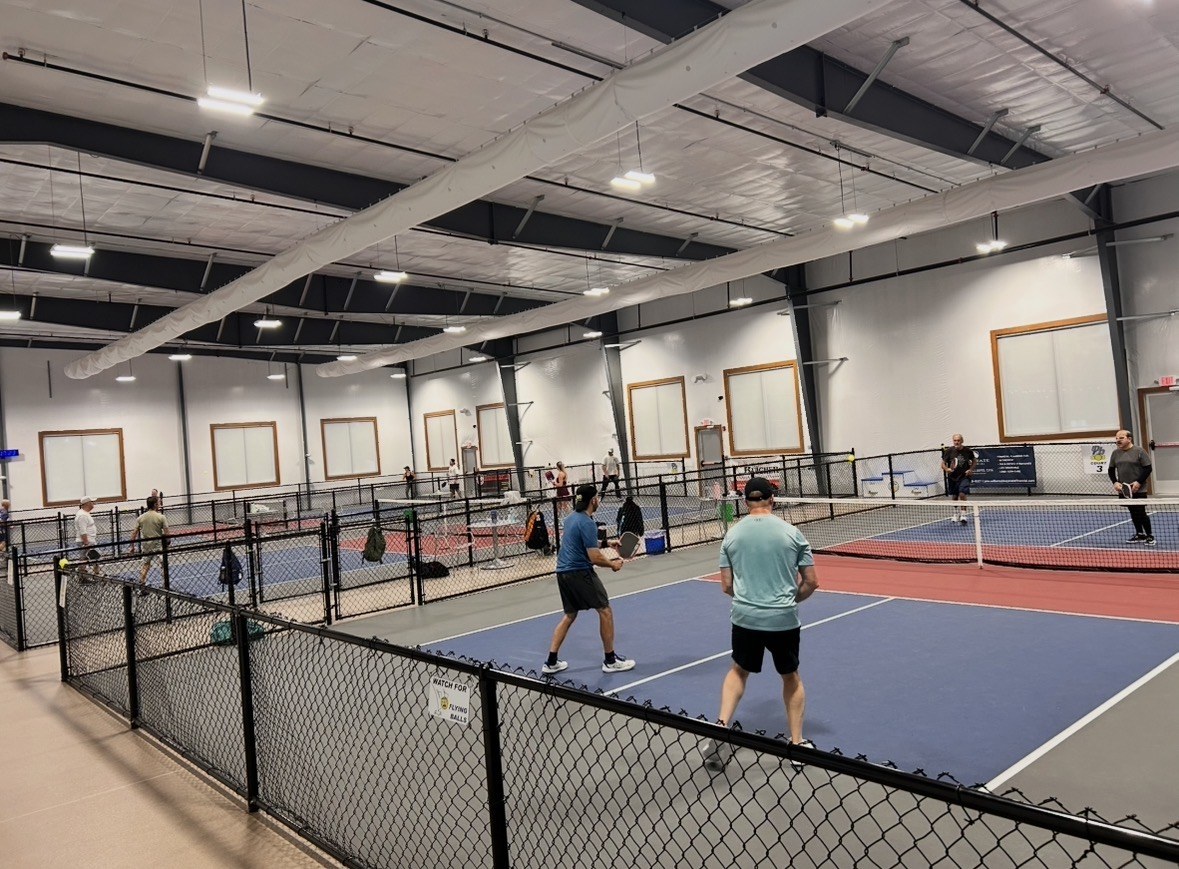
Having started 14 years ago with borrowed tennis courts and a dozen or so members, Tellico Village Pickleball Club (TVPBC) is now a club of over 1000 members and has 12 tournament-sized, dedicated pickleball courts. Throughout the club’s growth, TVPBC has been focused on player growth and development through ‘Skills and Drills’ lessons, competitive tournaments, private lessons, and other offerings aimed to enhance player’s skills. One of the cruxes of TVPBC’s player development is their skills assessment, which is based on the USA Pickleball and International Pickleball Teaching Professional Association’s skills assessments. As a socially-based club, TVPBC leadership decided these models of skills assessments were suitable for the club’s needs with some additional tweaking and customization.
Steve McCormick, TVPBC’s Director of Evaluations feels the ‘why’ behind having a skills assessment at a pickleball club is simple. “Players are flocking to pickleball and with most sports, pickle[ball] has its own nuances. As new players wanted to join in, they needed some form of teaching and level placement,” McCormick says. This is where the Evaluations Program at TVPBC came into play as they sought to create a fun and productive environment where equally matched players are playing in the same groups.
Prior to the current structure of TVPBC’s skills assessment, they used a round robin-style evaluation in which players would participate in six sessions. Over the course of six weeks, players would play the sessions, comprising six games each, and the scores would be tallied throughout the session. “If a player met the minimums, they would level up,” which would ultimately determine where they stood in the final evaluation. While this system initially worked well for TVPBC, they eventually found that they could not rely on the assigned ‘auditor’ for each session who was responsible for time keeping and score retrieval. Over time, they realized that this honor-based system faltered too often, discouraging players from even showing up to the sessions to try to advance.
Based on the lessons they learned through running the skills assessment as a round robin, TVPBC pivoted to a self-evaluation model. McCormick intends for this structure to be a “way to get candidates to look at themselves, using the USAPA criteria, as openly as possible to help make sure they truly feel ready to attempt an [evaluation] try to level up.” The club provides detailed evaluation forms for players to complete and send to the Director of Evaluations (Steve McCormick) who then works with candidates to solidify their assessment. So far, this structure has worked well for TVPBC and McCormick believes “it’s a good tool for a socially-based club.”
At TVPBC, once a member has completed the skills assessment, they are able to play at their new level within the club immediately. This includes participating in local and open tournaments at this level with the confidence of knowing that an experienced pickleball evaluator has recognized the player’s skills at this particular level. Another program offered at TVPBC is their combined-level sessions, in which players can play up or down. McCormick highlights these sessions as they “really help encourage players to solidify their game.”

Having a skills assessment program is of great value both to a pickleball club and members alike. At the club level, it provides “the entire club…a level of comfort [knowing] that when [members] come to play, they will have enjoyable games.” This sense of comfort, trusting that games will be relatively equally matched, encourages members to keep coming back to the club time and time again. Moreover, at the member level, players gain a deeper and more technical understanding of where they are at and where they may want to be in the future as their game develops. Participating in a skills assessment is a valuable tool for individual growth while also benefiting the organizing club. At their core, McCormick believes clubs should “be trying to add value to the membership,” which is why he is adamant about the importance of offering skills assessments as a club. While not all TVPBC members partake in the skills assessment, they are made aware of upcoming sessions should they decide it would be of value to them as a member.
McCormick’s preeminent piece of advice in regards to having a skills assessment at your club is to understand the dynamic of your members and be able to decipher if the majority are there for the competition or simply to play with friends. He estimates that only 10-15% of the membership at TVPBC are there to play competitively. However, because the majority of other players who have completed the skills assessment enjoy playing within their level, the program works well for their club and fits the make-up of their membership. Further, as a club of 1000+ members, TVPBC “uses evaluation so that level play is effective and organized.” For larger clubs, instituting an evaluation process can help facilitate “better court scheduling and somewhat tighter play [than you] would get if players purely self-evaluated.” Regardless of the specific club dynamic or size, any pickleball club has the potential to have a successful skills assessment as long as you are taking into account the goals and desires of your members.
Pickleball skills assessment programs are ever changing and growing in parallel with the sport itself. McCormick has spoken with pickleball evaluators in similar roles to his at pickleball clubs throughout the country and has determined that there has yet to be a perfect system, especially within the social pickleball arena. Even still, skills assessment can be an invaluable tool to strengthen the club, as is the case at TVPBC.