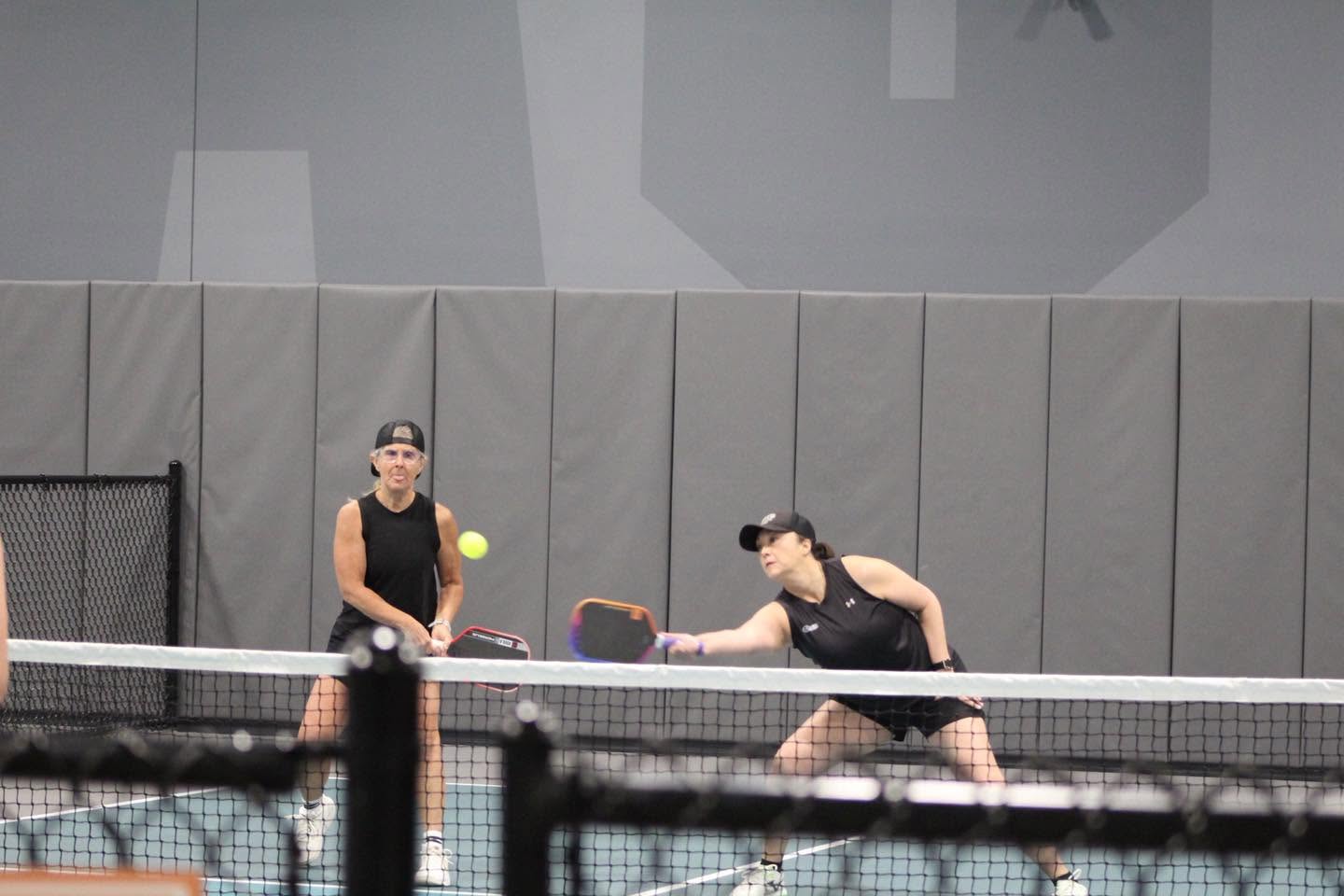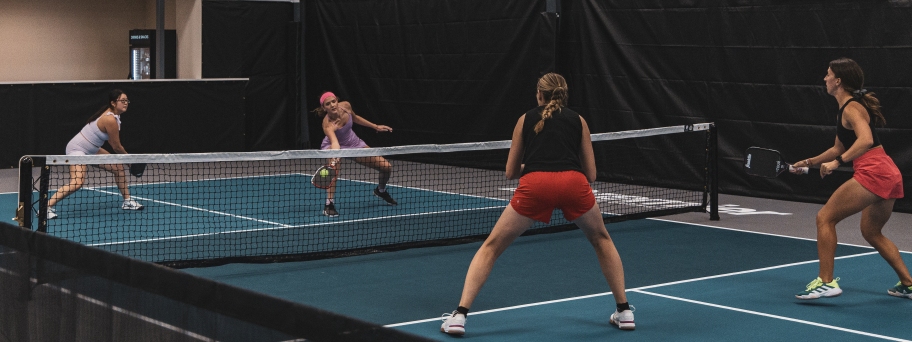
Ted Curtin and Paul Gosselin built Pickleball 603 in East Hampstead, New Hampshire, to be a premier pickleball facility as well as a place that members wanted to stay to socialize, gather and spend time. While that may sound like a lofty goal, after nearly three years, the club has become a destination for pickleball players of all abilities to enjoy and was recently ranked as a Top 20 pickleball club in the US.
Key Takeaways
- Pickleball 603 in East Hampstead, New Hampshire, was built by Ted Curtin and Paul Gosselin and was recently ranked as a Top 20 pickleball club in the US.
- The 22,000-square-foot facility features six indoor championship courts, five outdoor courts, a restaurant, locker rooms and a 3,200-square-foot patio.
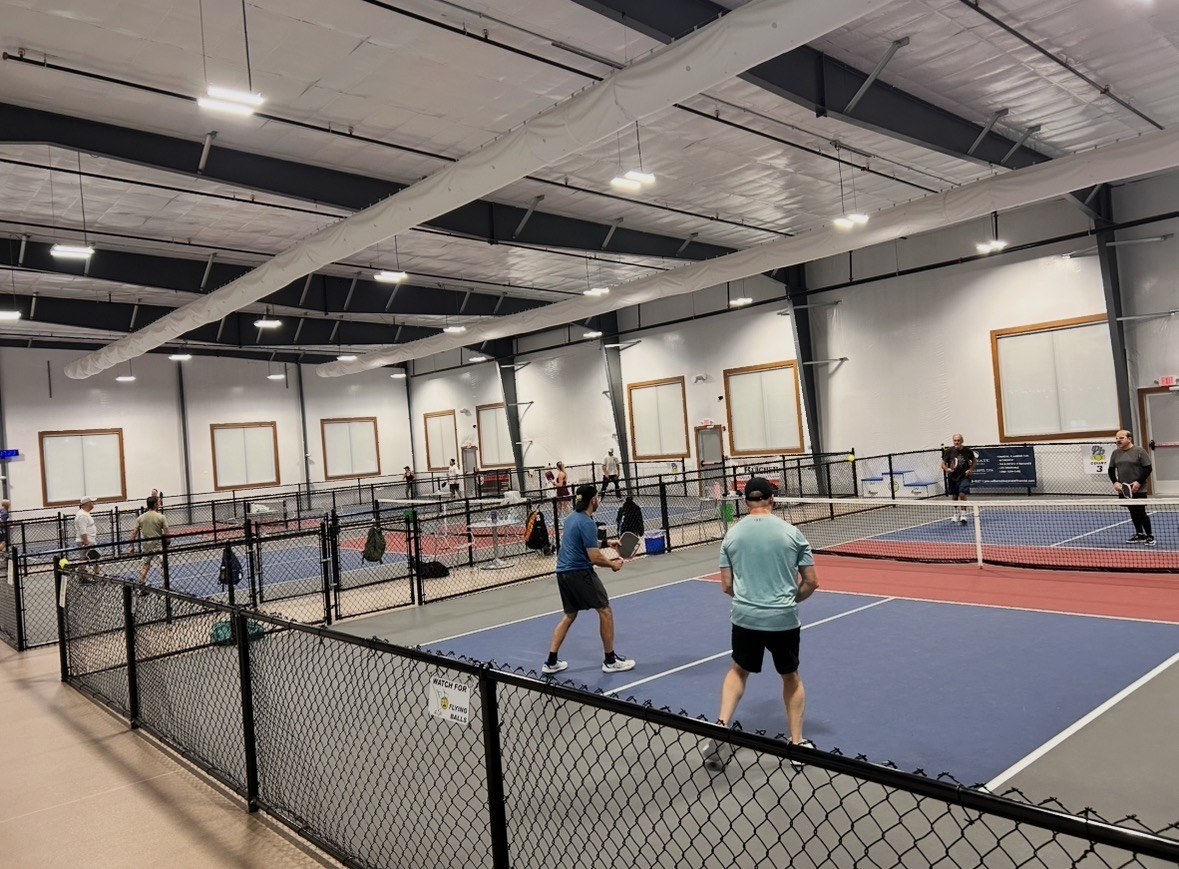
- Indoor courts are laid out three on each side of a wide center walkway with four-foot fencing, plus insulation and acoustic treatments to keep noise down.
- The on-site restaurant, The Kitchen, is open to the public and keeps members at the club after they play.
- A court with construction issues became a patio that now hosts concerts, with ticket sales more than doubling year over year and many going to non-members.
- New members share their DUPR ratings, but no one is rated until staff see them play, which keeps open play groups balanced.
- A higher price point than 90% of clubs creates a smaller, more dedicated membership and lets ownership stay hands-on.
Building a Premier Pickleball Facility
The 22,000-square-foot facility features six indoor championship courts along with five outdoor courts, a restaurant, locker rooms and a 3,200 square ft. patio perfect for concerts and outdoor gatherings.
Ted says they intentionally overdid everything to make the best facility possible, noting as the sport continues to grow, players aren’t settling for basketball courts lined for pickleball anymore.
“We worked on issues we saw with other clubs and fixed them during our construction,” Ted says. “Our indoor courts are laid out with three on each side and a wide walkway down the middle with four-foot fencing on either side. You can play for hours and not have a ball bounce onto your court or someone walk through your space.”
The owners also added insulation and acoustic treatments to keep noise down, along with strategic placement of the locker rooms and restaurant. All the small details are what is helping to make Pickleball 603 a big success.

The Kitchen Keeps Members at the Club
Creating a space members want to be in includes creating opportunities to stay and build on camaraderie and a feeling of belonging. For Pickleball 603, the aptly named restaurant, The Kitchen, does just that. With a menu that features quality, fresh and delicious food, it extends the time members spend at the club and is also open to the public, creating opportunities for more people to check out the club. For example, they will offer a special for a family to play on a court then get a free pizza and pop in the restaurant to give them exposure to the club for a low price.
Ted says the restaurant opened five or six months after the club and they watched players head out to the many surrounding restaurants after playing. Now those same players are heading to The Kitchen and continuing their connection with the club.

An Outdoor Patio That Brings in Non-Members
Another avenue to keep members on property and introduce potential members to the facility is through the large outdoor patio space.
“We turned a court that had some construction issues into a large patio and it’s been one of the best things to happen,” says Ted. “We held one concert last year, two this year and plan on three next summer. We sold more than double the tickets to our shows this year from last and many were to non-members.”

The space is also fantastic for member appreciation nights and enjoyment of great weather.

A Player Placement System Built for Open Play
Along with a top-notch dining facility, the club is home to a customized player placement system designed for thriving open play. While new members are asked DUPR ratings, Ted and his son Bennett, who is the general manager, won’t rate a member without seeing them play first.
“A 4.0 in one state might be a 3.0 here, so we make sure to see what kind of partner a player would be before assigning them a rating in our club,” Bennett says. “Most of our groups are mixed in or round robins, and if we place someone in the wrong group, that is frustrating for everyone.”

Pickleball 603 has a higher price point than 90% of pickleball clubs creating a smaller and more dedicated membership. This also allows Ted and Bennett to be very involved, including with hands-on player placement. While it can be difficult to tell a member they aren’t ready to move up, Ted and Bennett are confident that staying true to their system is creating the club people want to be involved in.
Trust and Transparency Make the System Work
Both add that a large reason their system works is the trust they’ve built with their members. It is difficult to break bad news about rankings; however, thanks to the trust they’ve created with their members and being transparent about the rankings and skills needed, the club has created a successful system that works for them and their members in the long run.
“Some players want to move up while others are happy where they are,” Ted says. “We root for all of our members to reach the level they want.”

A Culture Without Cliques
Ted and Bennett note how great it is to watch the levels mix on courts because they are all friends, regardless of skill level. The other day, Ted says he saw a 2.5 and a 4.0 having drinks in the bar together. They may have both started as 2.5s and have maintained that friendship throughout the rankings. The higher price point can lead to a smaller club and the rating system creates more integrated playing opportunities that both help to reduce cliques and create a great environment.

With tournament play growing, membership thriving and outdoor non-pickleball events being such a hit, it is evident that the club’s deliberate approach is working. By intentionally creating a space members feel involved with through open communication with management, Pickleball 603 has created a club unlike any other in the area. Both Bennett and Ted will tell you it can be tough to create something uniquely yours, and they wouldn’t have it any other way.
Frequently Asked Questions
Where is Pickleball 603 located?
Pickleball 603 is in East Hampstead, New Hampshire. The 22,000-square-foot facility has six indoor championship courts, five outdoor courts, a restaurant, locker rooms and a 3,200-square-foot patio.
Who owns Pickleball 603?
Pickleball 603 was built by Ted Curtin and Paul Gosselin. Ted’s son Bennett is the club’s general manager.
How does Pickleball 603 rate new members?
New members are asked for their DUPR ratings, but Ted and Bennett won’t assign a club rating until they have seen a member play, so players land in the right open play groups and round robins.
Is the restaurant at Pickleball 603 open to the public?
Yes. The Kitchen is open to the public, which gives more people a chance to check out the club.
Read the Latest Issue of Pickleball Club Magazine
Want more operator stories like Pickleball 603’s, plus the data and strategies shaping the business of pickleball? Read the latest issue of Pickleball Club Magazine here, and subscribe to our newsletter so the next issue lands straight in your inbox. You can also browse more club profiles in our In The Kitchen section.