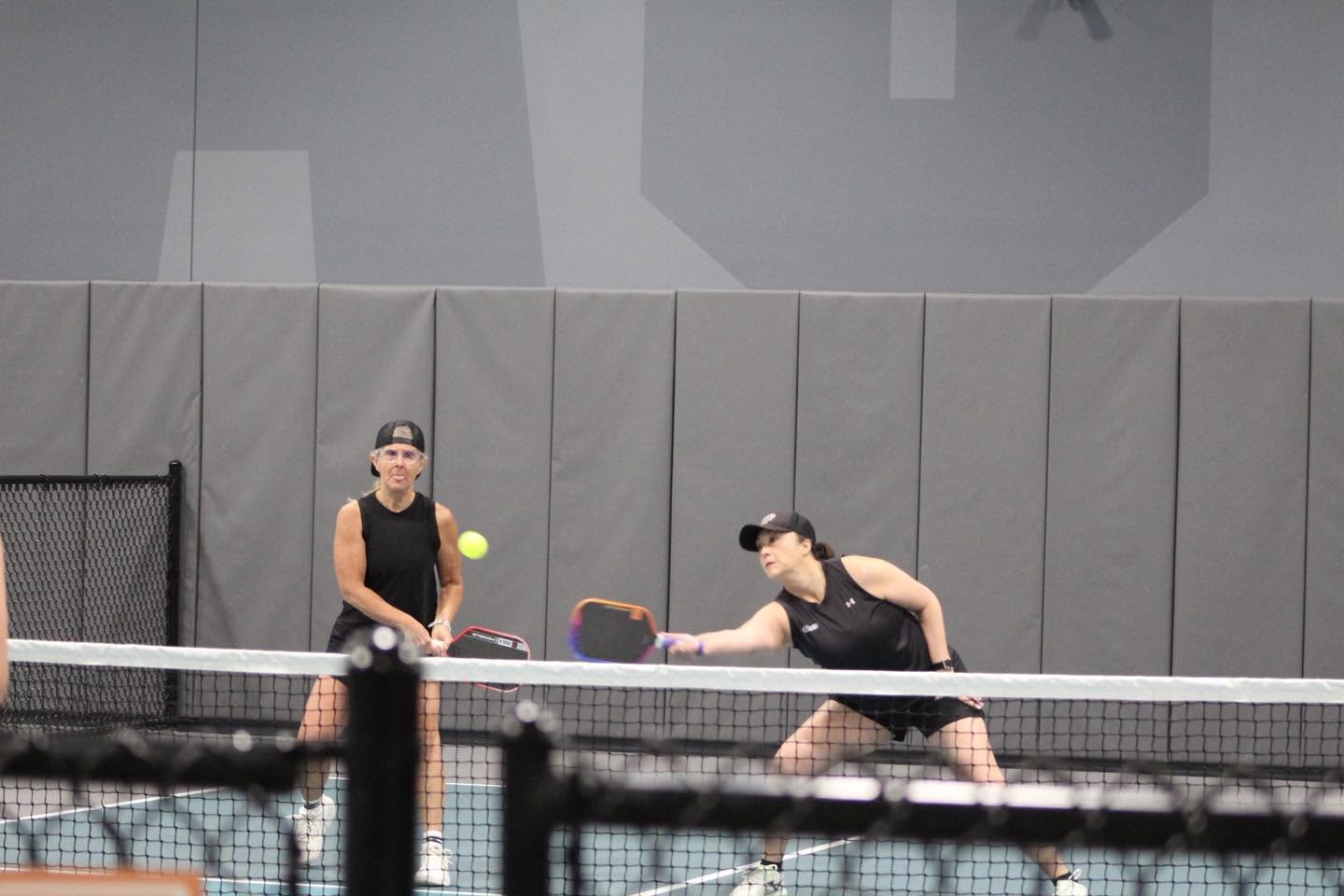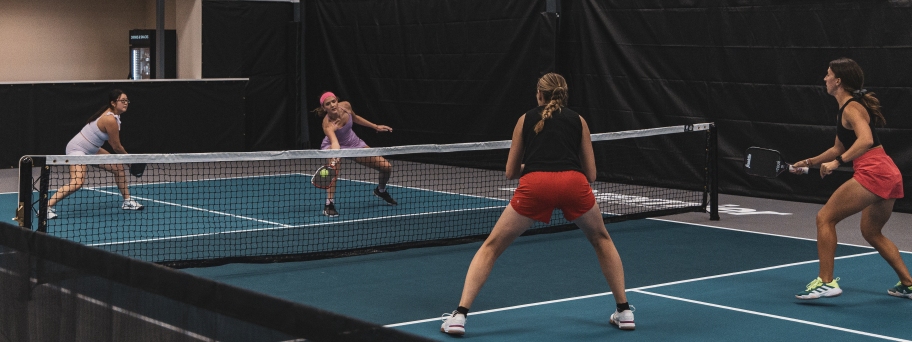
While for many clubs, bigger is better, The Flight Club 316 in Wichita, Kansas, focuses on players getting better, and it is paying off.
Some pickleball clubs find strength and growth through larger numbers. The Flight Club 316 in Wichita, Kansas, is finding its sweet spot by adopting a less-is-more approach to courts and members. The two-court facility positions itself as a location for intentional improvement, high-level training, and an improvement-driven culture.
A Less-Is-More Approach to Courts and Members
Opening near the end of 2024, The Flight Club 316 attracts higher-level players and those who want to become higher-level. The small size means no overcrowding and fewer noise interruptions and distractions through loud play and loose balls, allowing players to focus on their game and their growth. Cultivating a training-centered atmosphere has helped the club to be a leader in player development in the Wichita area.
“I think the easiest analogy is the difference between a general gym and a place that is a specific workout like CrossFit or Krav Maga,” owner Noi Sourinthone says. “We focus intentionally on player improvement and have a dedicated plan for every member.”
Noi adds the club wants members who are serious about playing and come to play hard, learn more then come back to do it all over.

Training Built Around Serious Player Development
The Flight Club 316 trains members to play the PPA, if that is their goal. They are very open that they are looking for a long-term commitment from members and that the coaches will push and train very hard. Members can expect real-time coaching during play including tactical corrections, proper form and a strategic understanding of the game and play.
What members can expect from the club’s development-first model:
- A dedicated improvement plan for every member
- Real-time, in-play coaching with tactical corrections and form work
- Training pathways toward PPA-level play for those who want it
- Access to stronger players to accelerate skill growth
“Let’s say you have a 4.6 and you want to get to 5.0,” says Noi. “We’ll train you and help you play with people better than you to further cement your skills. The Flight Club 316 is a bit of a bridge for good players looking to get that invite from higher-level players to join a game.”
How Scarcity Built an “Exclusive Mindset”
With only two courts, club exclusivity happened organically as the limited space created scarcity and then demand. Through that, members put more value on the experience since the access feels earned.
“We aren’t an exclusive club; our members have an exclusive mindset,” Noi says.
Flight 316 has leaned into a smaller size instead of trying to be something else. Large facilities can be very challenging from an operations standpoint including staffing, member disagreements, etc. Fewer courts allow owners to focus on building internal systems, developing very specific coaching programs and strengthening brand identity and building a very loyal clientele.
It’s a sharp contrast to operators scaling in the opposite direction — a tension explored in rethinking how pickleball facilities operate at scale — and it echoes how clubs like Dynamite Pickleball Club create unique offerings in a competitive landscape.
Filling the Mid-Level Player Gap
As the sport grows, the gaps between new and seasoned players grow also. Mid-level players can especially struggle as they can be too advanced for casual, pick-up recreational play yet not quite at the level to jump up to the more competitive 4.0+.
Flight 316 demonstrates that intentionally focusing on these gaps can be a benefit for all by creating a space where players feel genuinely invested in getting better together.
The like-minded players have built a strong community that continues to grow as members recruit members, who recruit other like-minded players. The club also offers leagues and point-play groups including the recently added women’s point-play groups at members’ request. Despite having two courts, roughly 100 players walk through the doors weekly to play and grow.
With a focus on improvement, the club offers a wide variety of options for their members to gain skills and practice, including:
- Leagues and point-play groups, including women’s point-play groups
- Tournaments
- Private and group lessons
- Play with the Pro sessions
Two Courts, 230+ Players: Reach Beyond the Footprint
|
Player group |
Weekly players |
|---|---|
| In-house players (weekly, 2 courts) |
100 |
| YMCA league players managed |
130 |
| Total players reached weekly |
230+ |
Chart: Two Courts, 230+ Players — The Flight Club 316’s Reach. A two-court facility punches far above its footprint by pairing in-house play with a YMCA partnership. Source: The Flight Club 316, Wichita KS / Pickleball Club Magazine.
Building a Brand Beyond the Courts
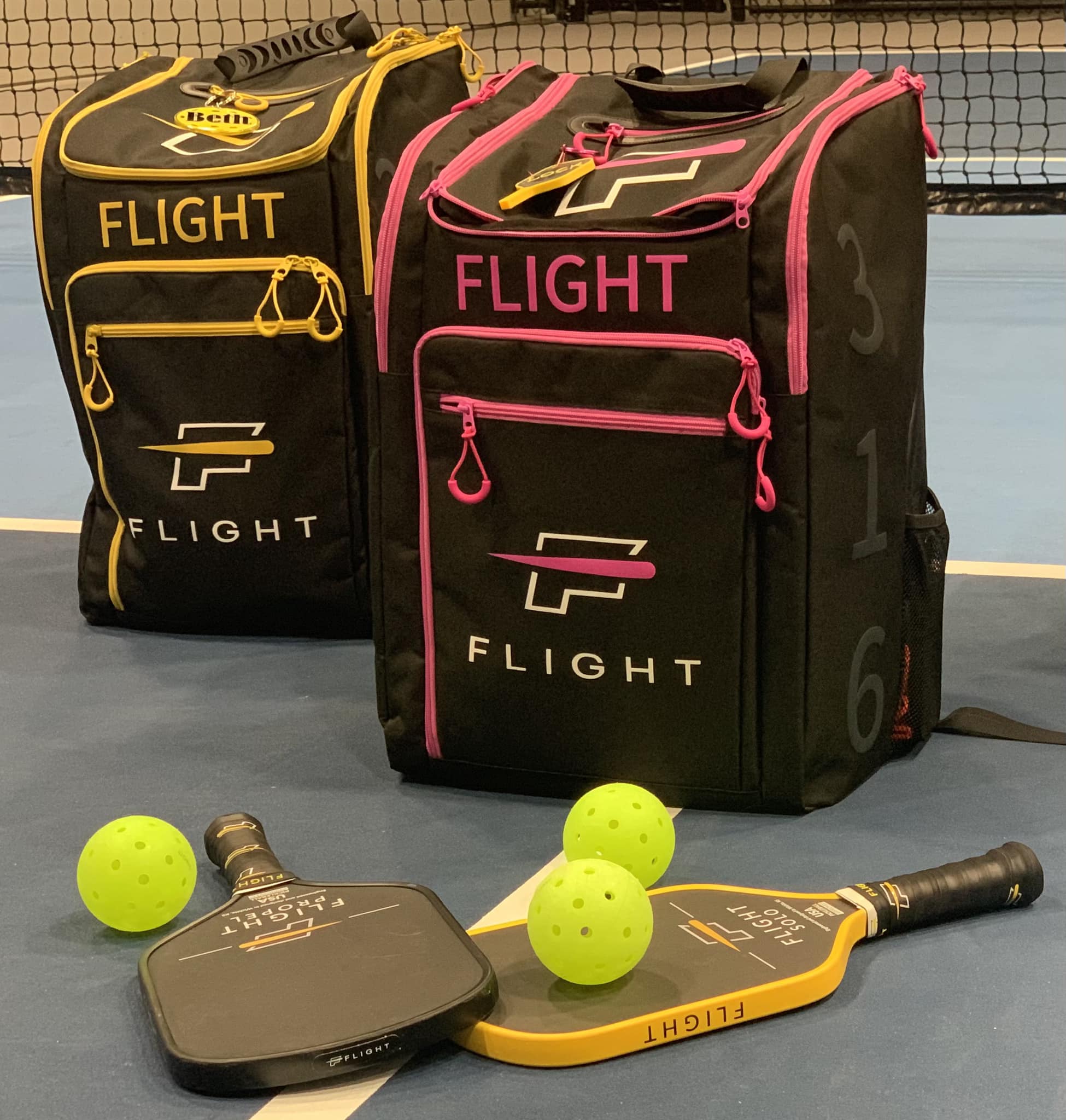
While memberships drive revenue, the club is working to expand the brand beyond the facility through development of The Flight Club 316 branded paddles, apparel and even balls. Noi says they test new paddles at the club with player feedback a large part of their R&D.
Turning a club into a product brand is a proven way to diversify income — much like how pro shops become revenue engines. It’s another reminder that pickleball needs more than just courts and paddles to thrive.
Partnerships That Expand Reach Without Capital
The club also has a partnership with the local YMCA to run its leagues and programming.
“There are approximately 130 YMCA league players that we manage at the YMCA,” says Noi. “It is a win-win situation that allows the Y to grow their pickleball programming and learn a bit from us while we expand our visibility and access to new players.” He adds they are exploring more partnerships with other area facilities after the success of the programming at the Y.
“These partnerships are a great way for us to grow our brand and reputation with larger facilities without expending capital to build the facility ourselves.”
That partnership-led growth is a strategy more operators are using to build sustainable growth without overextending on real estate.
Any Size Can Lead With Intentionality
The Flight Club 316 demonstrates that clubs can be successful at any size with intentionality, a strong club culture and a vision. Becoming a leader in your market can be possible with determination, a vision, and thinking outside the box.

For operators just starting out, those same principles, culture, focus, and a clear plan, are the foundation of opening a successful pickleball facility.
Frequently Asked Questions
How can a two-court pickleball facility be profitable?
The Flight Club 316 focuses on high-value player development, a strong membership culture, and low operational complexity. With roughly 100 weekly in-house players plus 130 managed through a YMCA partnership, plus a branded product line, it reaches 230+ players and diversifies revenue without building more courts.
What is an “exclusive mindset” pickleball club?
It’s a positioning strategy: rather than restricting membership, The Flight Club 316 uses its small size and development focus to make access feel earned. Members value the experience more because it is intentional and improvement-driven.
How do pickleball clubs use partnerships to grow?
The Flight Club 316 partners with the local YMCA to run leagues and programming, reaching new players and building brand reputation without the capital cost of expanding its own facility.
Read the Latest Issue of Pickleball Club Magazine
Hungry for more operator playbooks like The Flight Club 316’s? Read the latest issue of Pickleball Club Magazine here, and subscribe to our newsletter to get every new issue delivered to your inbox.