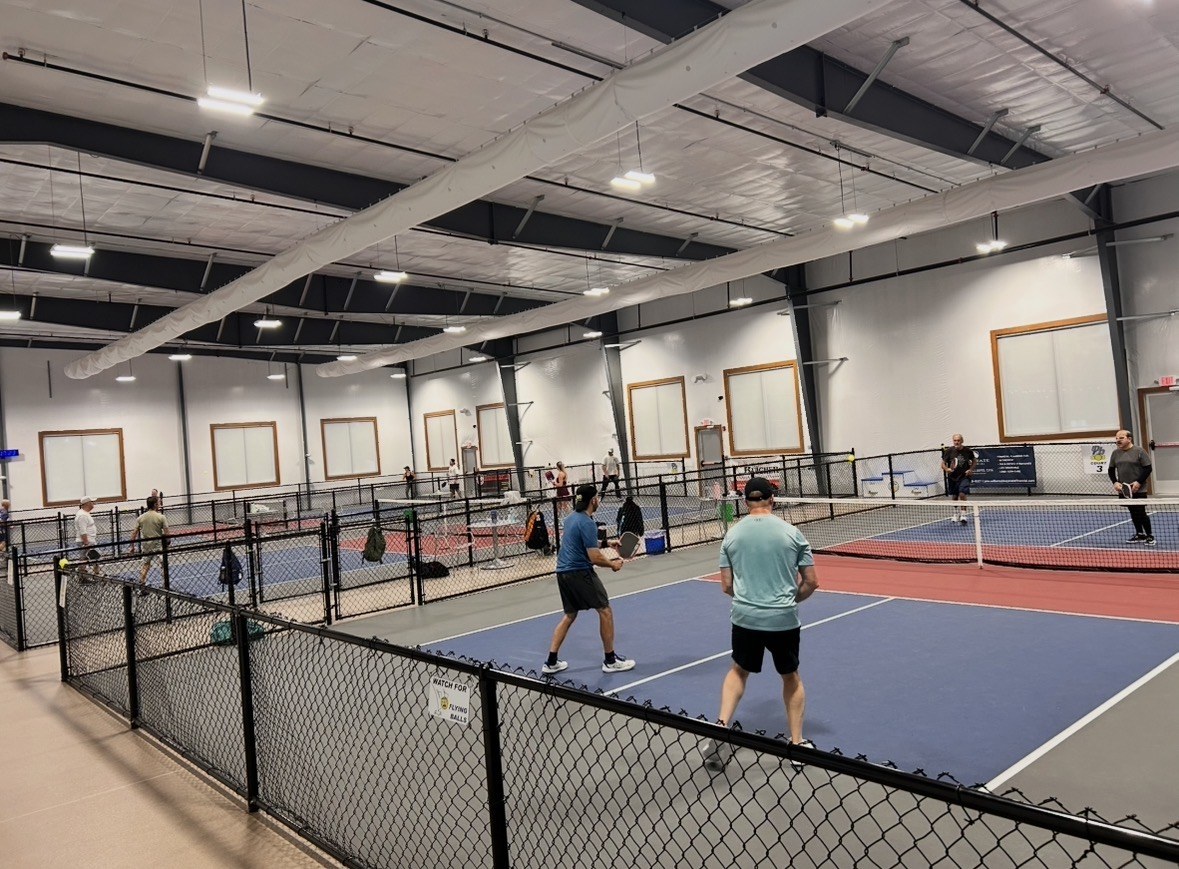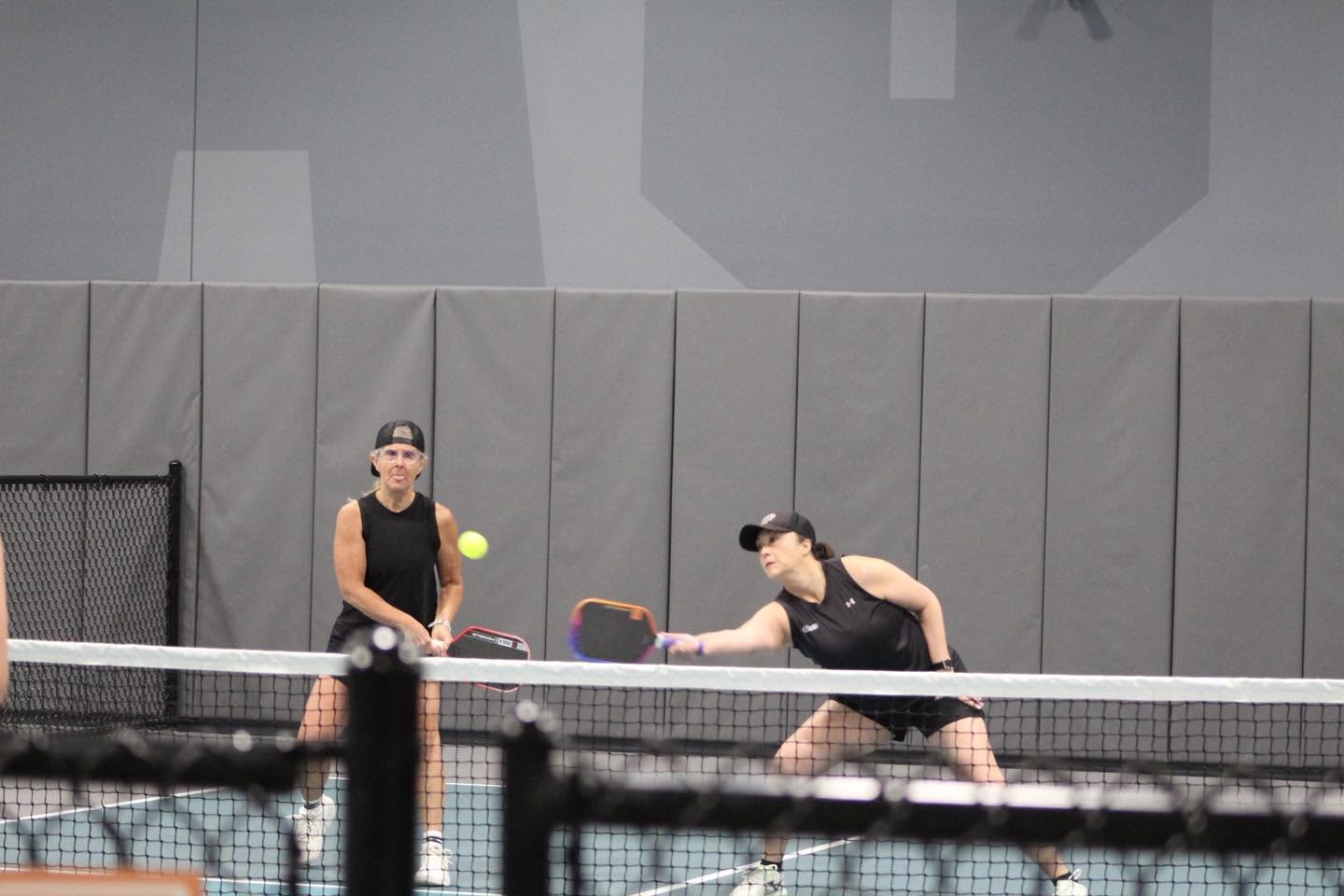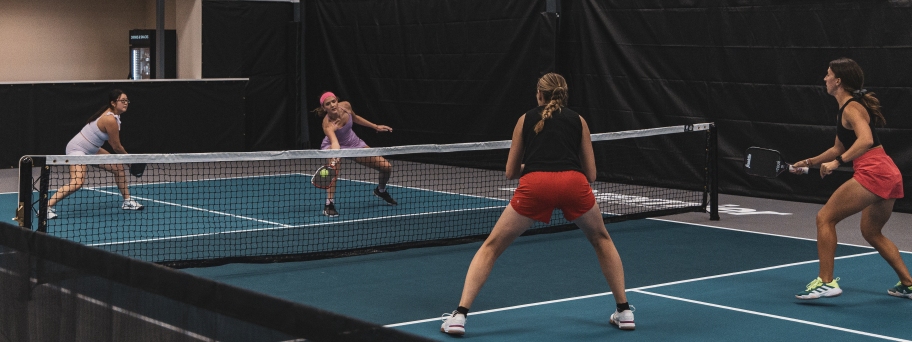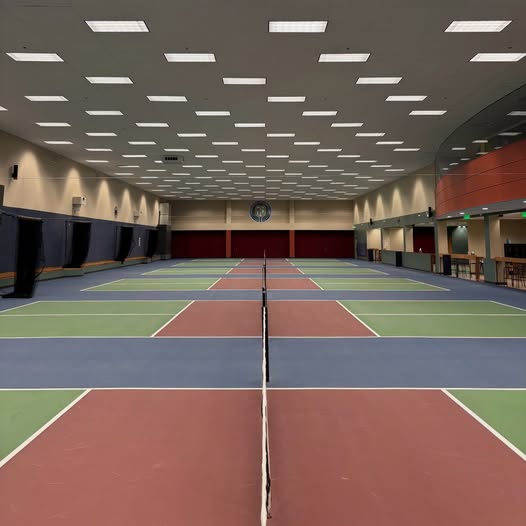
The Minneapolis Pickleball Club, located in the heart of downtown Minneapolis, has evolved from tape on the floors of unused space during COVID to a successful seven-court indoor facility with close to 600 members.
By modifying an existing facility to include higher ceilings, lower floors, professional-grade courts, and noise dampening for their neighbors, the facility is a premier location for pickleball players, both new and experienced.
Key Takeaways
- Minneapolis Pickleball Club (MPC) grew from tape on the floors of unused downtown space during COVID into a seven-court indoor facility with close to 600 members.
- The retrofit prioritized the things you cannot change later: higher ceilings, lower floors, professional-grade courts, and noise dampening for neighbors.
- Indoor parking, free for members, is the club’s most-advertised point of differentiation in a downtown market where parking is a daily friction point.
- Staff photograph new members at onboarding so the team can learn names and faces, keeping a growing club feeling small.
- A tiered membership menu matches different player intents: full access, couples and singles court time, unlimited daytime play, and Medicare-supported options for players 65 and older.
- Partnerships with local colleges, universities, and elementary school PE teachers are building the next generation of players.
A Downtown Retrofit Built Around the Non-Negotiables
MPC’s build followed a principle experienced operators recognize immediately: get the structural items right the first time, because amenities can be upgraded later and ceiling height cannot.
The club’s core facility investments included:
- Higher ceilings carved out of an existing building envelope
- Lower floors to create the vertical clearance indoor play requires
- Professional-grade courts with cushioned surfaces
- Noise dampening to keep neighboring tenants and residents happy
Sound mitigation is rarely optional in a dense downtown setting, and lighting and surface decisions carry the same weight. Operators planning a similar conversion should read our guidance on expert tips for lighting your pickleball court properly and the fundamentals in how to open a successful pickleball facility before signing a lease.

MPC is not alone in betting on an urban core rather than a suburban pad site. Court 16 in New York City and City Walk Pickleball in Birmingham have made the same calculation: visibility and density are worth the added complexity of an urban build.
Indoor Parking Is the Amenity Members Talk About
Another bonus, and highly advertised feature of the club, is that, thanks to the downtown location, they offer indoor parking. This is especially valuable in the winter as well as year-round since parking can always be tricky in a downtown area.
While all players are able to park in the covered lot, a perk for members is free parking. Along with knowing their customers, focusing on points of differentiation is a key part of the club’s success.
In a Minnesota winter, covered parking is not a nice-to-have. It is the difference between a member showing up for a 7:00 AM open play and staying home. Differentiation like this is exactly the kind of asset that belongs in a club’s marketing, a lesson covered in how marketing helped the Al Kruse Pickleball Center expand membership.
Minneapolis Pickleball Club at a Glance
|
Metric |
Minneapolis Pickleball Club | Common industry benchmark |
|---|---|---|
|
Indoor courts |
7 | Varies |
| Members | ~600 |
Varies |
|
Members per court |
~86 | ~100 players per court |
| Parking | Indoor, free for members |
Surface lot or street |
| Location type | Downtown retrofit |
Suburban warehouse or pad site |
Chart: Minneapolis Pickleball Club Operates Below the Industry Player-Per-Court Norm. At roughly 86 members per court, MPC protects court availability while the downtown location and free indoor parking carry the differentiation. Source: Minneapolis Pickleball Club / Pickleball Club Magazine.
Knowing the Players by Name, Even at 600 Members
General Manager Matt Fisher and Club Director Eric Larsen say a tenet of the club is to know the players. As a newcomer, Eric joked to Matt that he should use flashcards to get to know their players since it is so important to the club.
“We snap a quick photo with new members when anyone onboards so we can get to know them,” says Eric. “As we continue to grow, we know many of our players prefer a smaller club experience. Getting to know them is a way we can make the club feel smaller.”
It also allows MPC to hear member feedback and help the club to offer what members want, league- and amenity-wise, and adjust programming accordingly. By building relationships, MPC is able to expand programs members are enjoying and minimize underperforming programs.
That community-first instinct is the same one driving results at Cedar Falls Pickleball Club, where a club that opened with 27 members now serves nearly 450.
Automating the Admin So Staff Can Build Programming
Matt is excited to automate tracking program attendance and reduce time spent on administrative tasks to focus more on creating programming.
“Using an automated system, I can have two programs running at the same time and see which one members are participating in more,” Matt says. “I’m excited to try new things, see what our members enjoy and make it happen!”
Attendance data turns programming from guesswork into a testable decision. Run two offerings, read the participation, keep the winner. That discipline is what separates clubs that fill courts from clubs that fill calendars, and it connects directly to the economics laid out in turning player time into revenue.
It also frees up staff for higher-value work, a staffing philosophy explored in lessons from SPORTIME Pickleball on hiring and developing staff.
A Membership Menu Where Every Tier Has a Purpose
Another way MPC prioritizes members is through the wide variety of memberships. The club recognizes that different players want different things. At MPC, each membership option has a purpose.
Along with the standard membership that offers access to the entire club and two free open plays, they also understand some players just want to play with “their people.” That option is available for singles and couples who don’t want a social style of play; they simply want court time with each other.
| Membership tier | Who it is built for | What it solves |
|---|---|---|
| Standard | Players who want the full club experience | Full access plus two free open plays |
| Singles and couples court time | Players who want to play with “their people” | Court access without a social play format |
| Unlimited daytime (6:00 AM to 4:00 PM) | Retirees, remote workers, flexible schedules | Fills slow 9-to-5 hours at a deep court-time discount |
| Medicare membership | Players 65 and older | Works with supplemental insurance for passes or deep discounts |
Chart: Each Membership Tier at Minneapolis Pickleball Club Solves a Specific Problem. The tiers are designed around player intent and court utilization rather than a single price point. Source: Minneapolis Pickleball Club / Pickleball Club Magazine.
Membership philosophy is one of the highest-leverage decisions an operator makes. For a contrasting model built on scarcity rather than range, see how The Dink House uses an exclusive membership philosophy, and for handling seasonal shifts in the member base, see how to turn summer membership changes into opportunities to grow.
Filling the 9-to-5 Gap With a Daytime Membership
To keep courts busy during 9 to 5 business hours, Minneapolis Pickleball Club decided to offer an unlimited daytime membership with a deep court-time discount between 6:00 AM and 4:00 PM.
This helps to keep the club full during typically slower hours, which is good for business and good for when touring new members.
The second benefit is the one operators tend to underrate. A prospect touring an empty facility at 11:00 AM sees a risk. A prospect touring courts full of players sees a community worth joining. Daytime utilization is a sales asset, not just a revenue line.

Keeping Players 65 and Older Active
Eric believes it is important to keep 65+ aged players involved and active. In that spirit, the club offers Medicare memberships that work with supplemental insurance programs to offer passes or deep discounts.
He adds that many of the members enjoy playing during the daytime for social time with members of all ages as well as to get some movement, both of which are essential. He adds that, thanks to the club’s cushioned courts, it is easier for people to stay active and still feel good the next day.
The senior segment is one of the most durable in the sport, and clubs that build for it intentionally see the payoff in weekday utilization and retention. Our breakdown of three strategies for pickleball clubs to tap into the growing senior demographic covers how other operators are approaching it.
Building the Next Generation of Players
To continue the growth of the sport and the club, MPC works directly with local colleges and universities in partnership with their pickleball clubs. They also offer affordable evening play for college students on Tuesday and soon-to-be Saturday evenings. The open play doesn’t require a DUPR rating and the club enjoys offering an alternative weekend activity as a healthy option.
The club recently hosted PE teachers from local elementary schools for a three-hour session to help introduce pickleball to an even younger generation.

Eric hopes pickleball might make its way into the PE curriculum at some point, and MPC would be happy to host a field trip for students.
Youth pipelines take years to pay off and almost nothing to start. SPORTIME’s interclub league model shows what that investment looks like once it matures into revenue.
What Operators Can Take From the MPC Playbook
For club owners and operators evaluating their own facility, five moves from MPC translate directly:
- Spend on what you cannot retrofit. Ceilings, floors, court surfaces, and sound mitigation come first. Amenities can wait.
- Name your differentiator and market it relentlessly. For MPC, free indoor parking in a downtown market is worth more than another lounge.
- Build a system for learning members’ names. A photo at onboarding is a five-second habit that keeps a 600-member club feeling small.
- Price for the hours you need to fill. A discounted 6:00 AM to 4:00 PM tier converts dead inventory into revenue and better tours.
- Let attendance data pick your programming. Run two options at once, read participation, then scale the winner.
The success of MPC is related to more than an accessible and convenient downtown location. Through investments in the facility, infrastructure and most importantly the players, MPC is investing in its future.
Operators thinking beyond a single location will find related lessons in from one facility to many: rethinking how pickleball facilities operate at scale.
Frequently Asked Questions
Where is Minneapolis Pickleball Club located?
Minneapolis Pickleball Club is a seven-court indoor facility located in the heart of downtown Minneapolis, Minnesota. It began as tape on the floors of unused space during COVID and now serves close to 600 members.
How many courts and members does Minneapolis Pickleball Club have?
The club operates seven indoor courts and has close to 600 members, which works out to roughly 86 members per court, below the commonly cited industry benchmark of about 100 players per court.
Does Minneapolis Pickleball Club offer parking?
Yes. The downtown location includes indoor parking. All players can park in the covered lot, and free parking is a members-only perk. It is one of the club’s most heavily advertised points of differentiation, especially during Minnesota winters.
What membership options does Minneapolis Pickleball Club offer?
The club offers a standard membership with full club access and two free open plays, a court-time option for singles and couples who prefer to play with their own group rather than in social play, an unlimited daytime membership with a deep court-time discount from 6:00 AM to 4:00 PM, and Medicare memberships that work with supplemental insurance programs to provide passes or deep discounts for players 65 and older.
How does Minneapolis Pickleball Club keep courts busy during slow hours?
MPC offers an unlimited daytime membership with a deep court-time discount between 6:00 AM and 4:00 PM. Filling those business hours improves revenue and makes facility tours more compelling for prospective members.
Does Minneapolis Pickleball Club work with schools and colleges?
Yes. MPC partners with local colleges and universities and their pickleball clubs, and offers affordable evening open play for college students on Tuesdays, with Saturday evenings coming soon. No DUPR rating is required. The club also hosted PE teachers from local elementary schools for a three-hour introductory session.
How do pickleball clubs reduce noise for neighbors?
Noise dampening built into the facility during construction is the most effective approach, particularly for downtown and mixed-use buildings. MPC included noise dampening for neighbors as part of its retrofit, alongside higher ceilings, lower floors, and professional-grade courts.
Read the Latest Issue of Pickleball Club Magazine
Want more operator stories like MPC’s, plus the data and strategies shaping the business of pickleball? Read the latest issue of Pickleball Club Magazine here, and subscribe to our newsletter so the next issue lands straight in your inbox. You can also browse more club profiles in our In The Kitchen section.